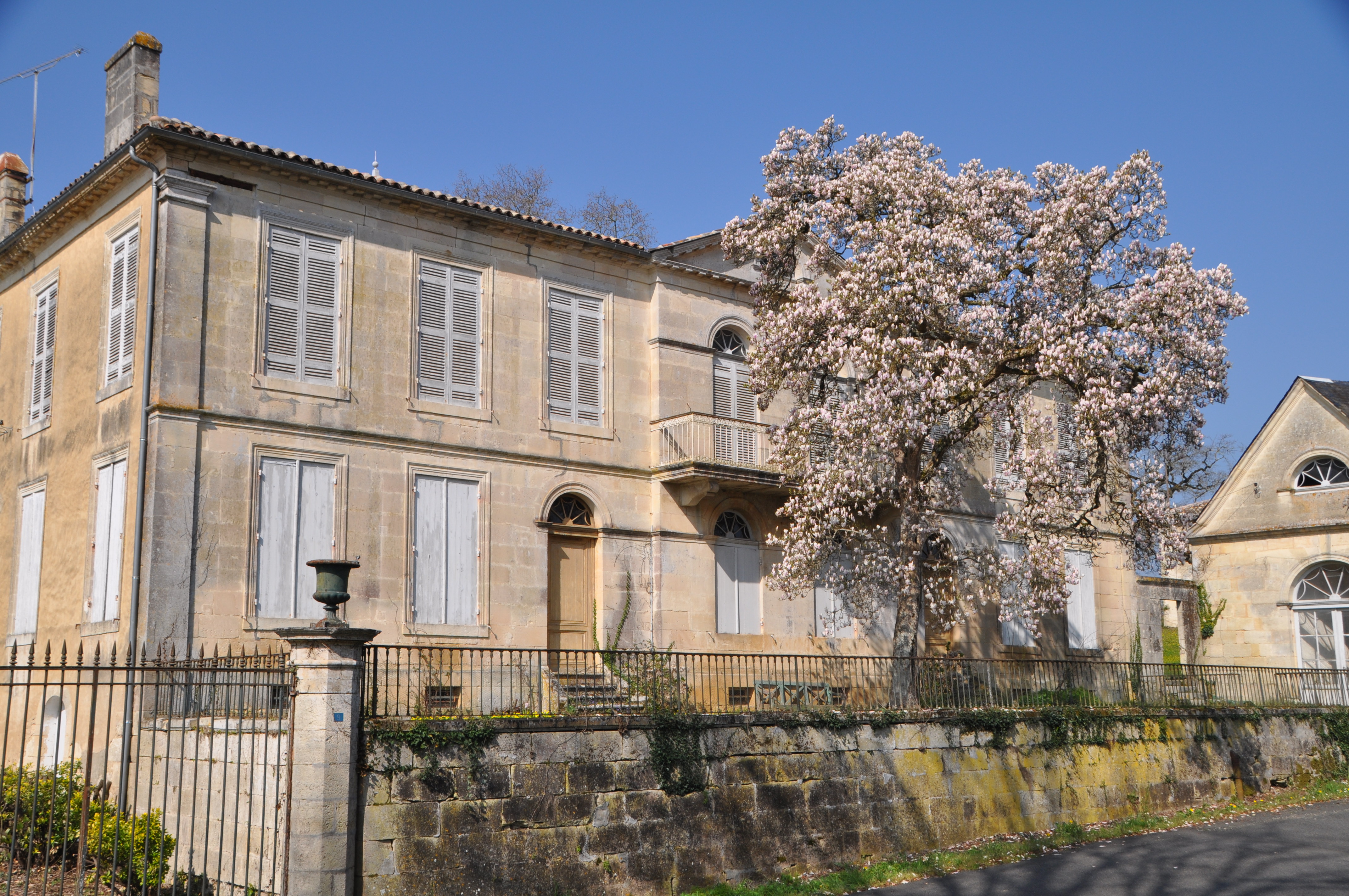
Why can’t I get a Corona in La Coruna?

After a night of analysing the weather in great amounts of detail, and now armed with our new 2 o’clock rule, we were up before the crack of dawn and setting sail for la Coruna. As usual on this part of the coast, we seemed to be tracking straight into the breeze. The seas were lumpy and unsettled but all in all it wasn’t too bad.

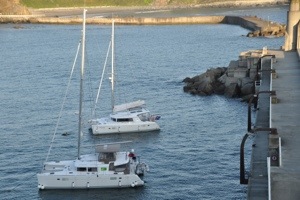
We made the 50nm around to la Coruna in good time. We were well inside the ria as the wind started to pick up at you guessed it, around 2pm. La Coruna has two main marinas and Mike, being in the lead, called both of them up, only getting a reply from Marina Coruna.

Then a guy on a bike cycled out to end of the jetty and guided us to our berth, right beside Ooroo.

Marina Coruna turned out to be a good choice, reasonably cheap by Spanish standards, great staff and facilities.

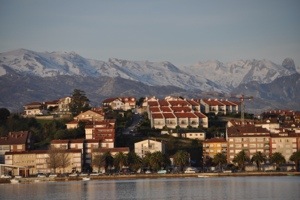
Safely berthed and formalities attended to it was time to have a corona in A Coruna. However it was not to be as Corona can’t legally go by its usual name in Spain because the Spanish royal family owns the trademark Corona. It therefore is sold in Spain as Coronita, meaning “little crown.” Never mind, it still tasted good, and as we were to later discover the local beer called Estrella Galicia was a pretty good drop at half the price. Food and drink is crazily cheap in Spain.

Then it was into town to check it out.

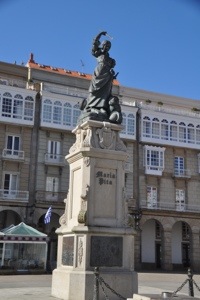
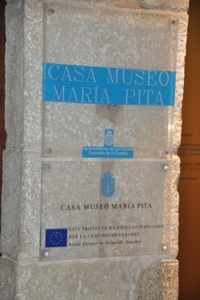
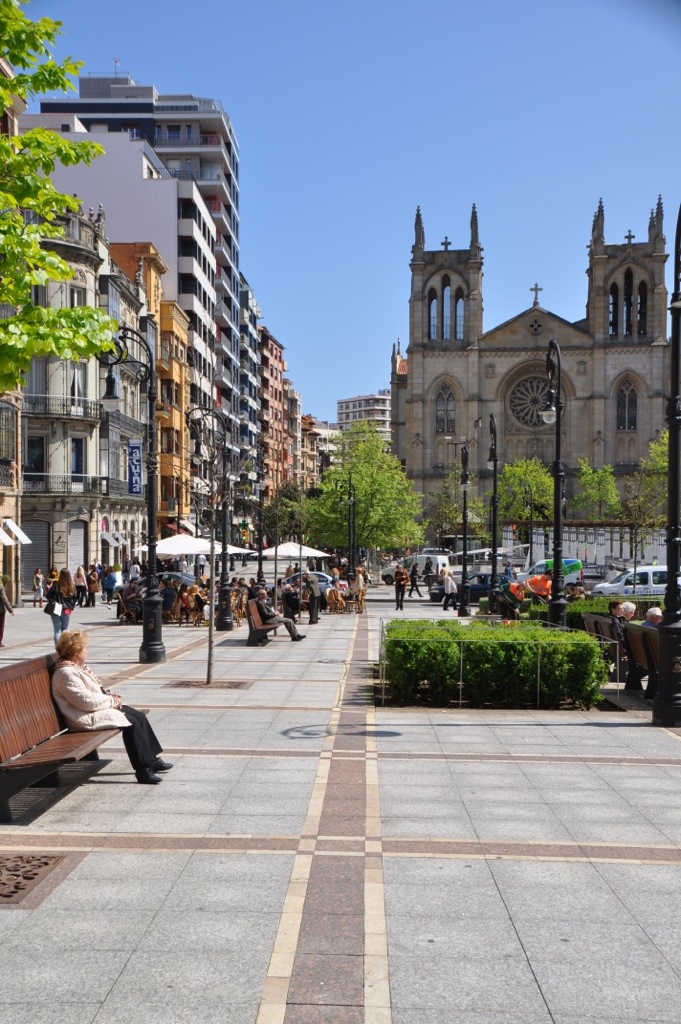
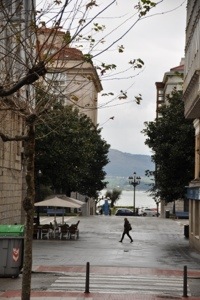
La Coruna is full of history. The main square is dedicated to Maria Pita, whose either famous for single handedly repelling Sir Francis Drake’s English Armada, or perhaps having four husbands, some of which unexplainedly died, leaving their wealth to poor Maria. We learned lots about Ms Pita on a free night-time tour of the city the following night.

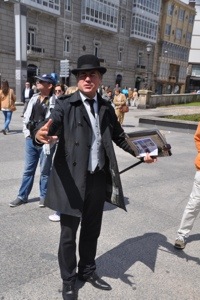
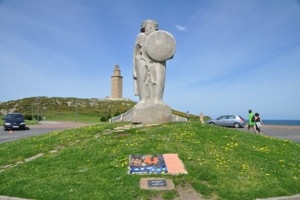
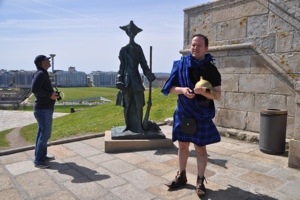
Talking of which, the free tours that the city puts on just about every day are great. The guides do a great job first speaking Spanish then English and dressing and acting the part. Unfortunately, I missed the tour of the Torre de Hercules, the oldest working lighthouse in the world, originally started by the Romans (what have they ever done for us?).

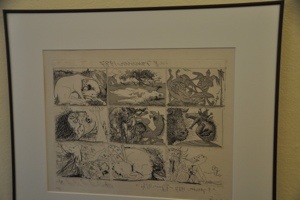
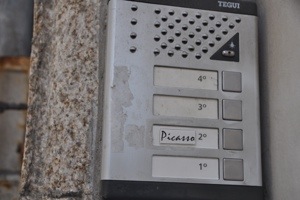
But I made sure I was on the Picasso Tour (Picasso lived here as a kid until his sister died and the family moved to Barcelona). The guide was a hoot and played the part to perfection – he was evidently a professional actor. We visited a lot of the city on this tour and saw the family home that Picasso grew up in – its now a museum. Interestingly, Picasso “invented” the white dove, which is now the international symbol of peace, whilst studying art at the local arts college.

A Coruna was where Joan left us. The airport was at Santiago de Compostela, a beautiful old town that marks the end of the pilgrims walk to the burial place of st James, one of the apostles. Whilst allan went with joan, I had the engines serviced, along with two other lagoons – a very popular place to do the 50 hour service it seems.

Engine service completed, I headed to the train station, an hours walk away and paid my €5 for a ticket to Santiago on a swish new train. 40 minutes later and I was there. A 30 minute walk into the old city and I found Al outside of the main cathedral. He was still buzzing from having attended 12 o’clock mass – quite an elaborate affair full of pilgrims. Even though Allan wasn’t religious, it seemed to have had quite an effect on him.

The cathedral is just great to walk around with lots of little chapels spread around its edges, interspersed with old fashioned confessional boxes. The central attraction was the tomb of st. James, located directly underneath and behind the main alter. It was a very moving place.

Santiago is full of old churches, university buildings, shops and tapas bars. We had a coffee with one of the pilgrims, a lady from Denmark, who had a car crash 13 years ago and couldn’t walk more than 500m last year. She went on her own spiritual and healing journey, walking the whole 700kms along the Camino de Santiago, the famous pilgrims walk, to get there. My friends Paul and Jenny did a bit of the walk last year and rob has also done it so it was good to see what it was all about.

We finished the day by going to the 7pm mass, but this turned out to be much more low key than the midday mass as most of the tourists and pilgrims had left for the day. I thought there might be hope for Allan yet, two masses in one day, but we went to a bar straight after and I realized he’s probably beyond saving.

Back at La Mischief, and with a good sleep under our belts, next day we were off, heading south.

20130428-104556.jpg

20130428-104624.jpg

20130428-104702.jpg

20130428-104902.jpg

20130428-104942.jpg

20130428-105008.jpg

20130428-105033.jpg

20130428-105043.jpg

20130428-113000.jpg

20130428-113045.jpg

20130428-113056.jpg

20130428-113136.jpg

20130428-113230.jpg

20130428-113245.jpg

20130428-113349.jpg

20130428-113408.jpg

20130428-113421.jpg

20130428-113434.jpg

20130428-113524.jpg

20130428-113549.jpg

20130428-113620.jpg

20130428-113642.jpg

20130428-113731.jpg

20130428-113717.jpg

20130428-113803.jpg

20130428-113919.jpg

20130428-113954.jpg

20130428-182514.jpg

20130428-182529.jpg

20130428-182544.jpg

20130428-182641.jpg

20130428-113836.jpg

The New 2PM Rule

After a pleasant wander around Luarca in the morning, and some provisioning at the local markets, we headed back to our respective boats and headed off towards one of the scenic Rias that Galicia is renowned for. We had decided on Vilela as the place to anchor up and enjoy some fantastic scenery. The weather report looked good so off we went.

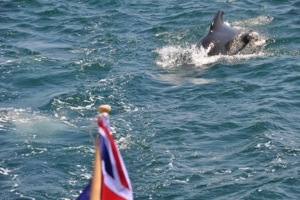
As usual Ooroo took off in front and it was largely a motoring exercise as the wind stayed well under 10 knots. Along the way,we got a call from Ooroo saying they were in the middle of a group of pilot whales a little bit ahead and further out to sea.

So with waypoint marked, we headed off in search of a whale adventure. Sure enough as we closed in on the way point, we saw a couple of pods of at least half a dazen whales each.

About 10 minutes later the wind rose abruptly to 20 kts then 30kts. Allan and I were busily reefing down La Mischief, allowing Joan to man the camera. She did however come over to our side of the boat, just as two or three whales decided to surface just under her nose. After letting out a loud sheik (whats he doing in this blog?), she managed to compose herself and the camera and got a good shot as the whales rounded up behind us.

By this stage the wind was climbing past 40kts and heading towards 50kts. Not again. Not when the forecast said light winds. Damn the spanish Weather Bureau. And for that matter the UK Weather Bureau – or whoever it is that provides the Navtex forecasts.

So now we had to find somewhere to hide. We were still a way off our destination. There was a big alumina port at San Ciprian ahead of us that looked promising, but Mike was on the radio and was advised not to go there. There was a small fishing village next door and this was also ruled out.

We finally settled on Burela, which is a commercial port with a fishing fleet as well as cargo and grain. They weren’t that keen to have two catamarans role up, but eventually they conceded and found some space for us. Once we’d decided on our overnight destination, we turned and ran for the coast and the apparent wind dropped below 35kts with the wind on our hind quarter. With 3 reefs in again, it was not that unpleasant as we sped into port.

Once inside the breakwater, we were directed to a spot on the wall that we managed to tie up to. We had plenty of fenders out and there was a ladder close by to climb up to the top with. Ooroo came in half an hour later and rafted up beside us.

And then the whole town came down to have a look at the two Australian Cats that had pulled up in their harbour. We were quite the tourist attraction. The Ooroo crew and Allan and Joan had a walk into town and came back with little to report.

We then sat down to try and work out this weather. We figured that if the weather on the grib that was 200nm to the north of us had slipped down and tripled in strength then this may have been the cause of our high winds. Then Mike remembered reading something on the JimB website, which said you should always look to leave early and be in by 2pm when the winds picked up.

So that is our new 2pm rule…leave early and get in by 2pm. And its turing out to be a very good rule in this neck of the woods.

20130426-224555.jpg

20130426-224629.jpg

20130426-224740.jpg

20130426-224753.jpg

20130426-224816.jpg

Al’s Spanish Hideout

There are two problems with wind – “no wind or too much wind”, well actually four problems if you then add “wind on your nose or wind directly up your bum”. Today we had little or no wind right up our bum.

So with the motors on we kept overrunning the little wind there was. Despite that it was a nice easy 30nm run to Luarca, our stay for the night. As usual Ooroo charged off in front, Mike had paid for both engines and was prepared to use 100% of them. Us, we like to potter along at 6-7 knots on just the one.

We made our way into the outer harbour at about 4pm and found Ooroo attached to one of the visitors buoys. There was talk of going into the inner harbor but at the end of the day, the locals didn’t want us in there (there really wasn’t any room for two big cats) and they had the hindsight and generosity to provide us with the choice of three visitors moorings.

The local marine rescue guys came out in there boat and helped tie our stern up to the seawall, with our bows secured to the mooring buoy. Our first Mediterranean Mooring type experience.

Then it was into the dingy and into town. Rounding the corner into the inner town was an OH WOW moment.

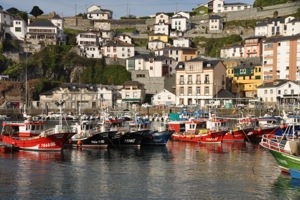
It was the prettiest little harbour you ever did see, filled with colourful painted wooden boats of all shapes and colours, casting brilliant reflections into the water. Surrounding the harbour was a quiet street full of cafes and shops, with the village running up the surrounding hillsides.

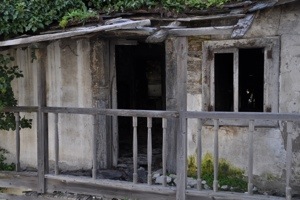
First stop was one of the little bars out the front, and then we left the girls shopping whilst we headed up the hill to get some great photos. Allan declared (several times) that if he ever went missing then this was the place to look for him. He even found an old very rundown house on the side of a hill that only Al would think he could do something with.

Dinner with the Ooroo crew capped off a perfect day.

20130422-121743.jpg

20130422-121757.jpg

20130422-121810.jpg

20130422-121831.jpg

20130422-121843.jpg

20130422-121857.jpg

20130422-121910.jpg

20130422-121929.jpg

20130422-121951.jpg

20130422-122003.jpg

20130422-122012.jpg

20130422-122022.jpg

20130422-122049.jpg

20130422-122105.jpg

20130422-122130.jpg

Out the Front Door and In the Back

After our night of wild parties (not ours), we dropped our mooring and headed off towards Gijon, 50nm away. We once again had to cope with a kno or more of current going against us. The sail was non-eventful – much have been as its only a couple of days ago and I can’t remember anything memorable about it.

But we made good progress and got to Gijon around 7pm. 16nm out of Gijon we saw Ooroo on AIS coming into Gijon – they’d come across the Bay of Biscay from Royan and had caught up with us in one big hop. Along the way they’d seen pods of 200 dolphins, sun fish and whales. Wow.

The marina had plenty of space and we pulled up next to Ooroo. The Ooroo crew were pretty whacked so we walked into the old town and found the nearest restaurant we could. Turned out to be a bit of a tourist trap with prices approaching normal. We’d got so used to eating and drinking cheaply in Spain that anything remotely approaching Perth prices seemed exorbitant.

Next morning things got even more expensive. It turns out this marina charges by the square metre – ie. length x width and thats a lot of square metres for a cat. 78 Euros a night in fact – the most expensive marina by a factor of 2. And then there was a 30 day cruising tax of 60 Euros. This was a bit of a surprise – also charged by the square metre, for all boats over 12m.

Wallets well and truly cleaned out, we headed off to explore the town. We walked around the headland with its old fortifications and caste iron sculptures (something quite common in these parts including at the Gugenheim – must be something about the iron ore they mine). Then we headed into the old town and found a Spanish Sim for my iPhone and a 25 Euro Nokia for my Travelsim. Having found a SIM card (vodaphone) that actually worked with prepaid data – took a few goes – it turns out that Vodaphone in Spain (and elsewhere) have blocked Viber – which I use to talk to Cas. So now I have an Orange Sim in a Wifi Hotspot that is slow and unreliable, a Vodaphone Sim that blocks VOIP and a TravelSim that is too costly for day to day data.

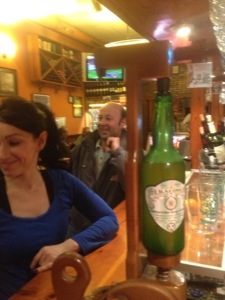
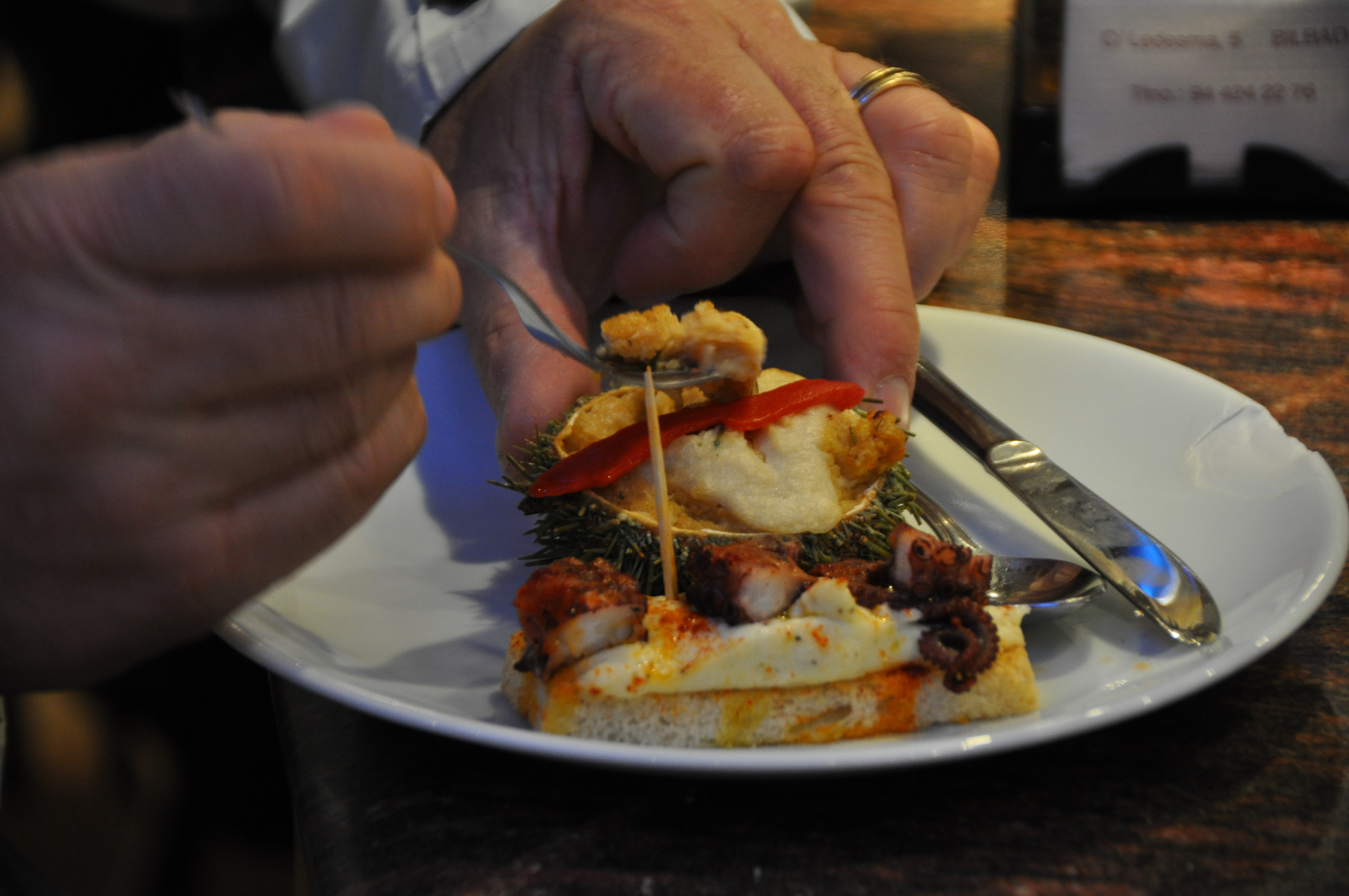
That night we decided we would try and find Tapas bars similar to Bilbao. In fact we sort of did better as we went into a few bars that provided free Tapas provided you drank their Crianza. No problem. Three bars later we were full of Tapas (and wine), and all it cost us was 6 Euro for 3 glasses of wine at each bar.

It would have been 4 bars if not for the fact that we inadvertently tried the same bar twice. Having found a really nice bar (our first one), we said our adios’es and decided to try a bar on the next street. So we turned the corner and a little way up we found another nice bar. We walked in and quickly noticed we were in the SAME bar. We had a laugh and so did the girl behind the bar. We quickly headed for the exit door and couldn’t stop laughing when we got out on the street.
Next morning, after a few chores, we cast our lines and left for Luarca, 30nm westwards.

20130417-191054.jpg

20130417-191128.jpg

20130417-191139.jpg

20130417-191153.jpg

20130417-191216.jpg

20130417-191224.jpg

20130417-191247.jpg

20130417-191322.jpg

20130417-191334.jpg

20130417-191345.jpg

20130417-191355.jpg

20130417-191410.jpg

20130417-191426.jpg

20130417-191437.jpg

Yesterday’s News

Well I’m now up to yesterday. Aren’t you proud, I’ve nearly caught up.

After our walk round the peninsular where the palace was, we hopped back on board and sailed west towards San Vincente de la Barquera, 30nm away We had a nice wind angle but the wind was dropping away and soon we were in motoring mode. As seems to be the way on this part of the coast, we were perpetually fighting a 1-2 kt current.

We got our heads around the fuel tanks and how to swap them over. We haven’t actually filled up as yet, still running on the fuel that came with the boat. We have one tank nearly full and one tank nearly empty. Unlike the Seawind you can swap all 3 engines from one tank to the other, with the pull of a lever.

The motor sail along the coast was very spectacular. The sun was shining on the snow capped mountains in the background, as we passed village after village perched on cliff tops, covered with a mat of very green grass.

We had to swing around a set of “wind towers” sticking out of the ocean. Not sure what the hell these were – strange looking towers to be there.

We got to our destination – San Vincente de la Barquera, an incredibly beautiful old fishing town on an equally beautiful estuary, just after 6pm. The guide book and our English farmer both said to tie up to the fishing boats, but some animated Spanish guy on the wharf had other ideas and waved us away.

We hunted around and found a spare mooring in the estuary, a bit of a way from town. Although the estuary is full at high tide (which it was),it empties out at low tide and we found ourselves in a narrow channel with sandbanks close by either side that night at low tide. But more about 3am later.

We weren’t sure about the mooring so I (and the anchor alarm (set at 66ft)) stayed on board La Mischief whilst Allan and Joan launched “A Little Bit Of Mischief” and set off the explore the town.

There weren’t gone long and were pretty disappointed with the town.

After a quick nightcap, we hit the sack. With things quiet in the boat, you could hear the DJ and the music waft across the estuary. As the night progressed, the music and the DJ got louder and louder. We were quite a way from the town, but we could still hear it clearly. Occasionally cannons would go off and there would be a puff of smoke above the town.

A normal Saturday night in San Vincente perhaps???

With the change of the tide the anchor alarm went off a few times and at 3.30am the music was going off. Think Cas and I might have had a good time there!

Next morning we were up at 8am and off out the channel at high tide heading for Gijon.

And with that, my blog is now officially up to date!!!!!!!

20130414-123143.jpg

20130414-123304.jpg

20130414-123246.jpg

20130414-123101.jpg

Update for Mike

I got an email from my mate Mike, and because he’s such a nice bloke, I thought I would devote a whole blog entry to his questions….

Mike wrote
Hey if you can add this to your blog somewhere it’ll be good.
Engines? How did you find them?
Steerage, any comments on the forward rudders?
Handling in marinas?
Sail plan, what have you got?
Main Reefing setup?
Rigging winch clutch / sailing control?
Windage in windward sailing, beating AWA?
Elevated helm access?
Forward visibility from the helm? (through the genoa)
Smart charger?
Batteries?
Inverter capacity?
What is that thing under the floor? 13. Watermaker?
Bridge deck clearance?
Tender davits and access?
Drogues and sea anchors?
Solar panels, how did you go with those flexibles

1. Lets start with engines.

The 75HP engines are brilliant. Had a few nervous moments with them early on. Wasn’t used to the power in the marina. Now heavy handed Steve has become light handed Steve, its all good.
They also take you places quickly. Can easily motor along at 10 knots.
They got a great work out in the 60+ knots the other day. Thats when you really need them. Glad I took all the advice that said get the biggest engines you could.

2. The forward rudder setup is no worries provided you remember to centre and lock the wheel when doing all those tricky marina moves. Hopefully they make the motors more efficient when you are motoring long distances.

3. The sail plan consists of a bloody big square topped main and a genoa, plus a geneker. It’s a big boat and it needs pushing along. Plan is to get a parasail before we head off across the Atlantic and Pacific.

4. The main reefing setup is something we are rapidly becoming experts on. Two single line reefs, the third needs to be clipped on at the front. Good set-up – they seem to go in and out quite easily. Getting our heads around reefing the genoa as well. It has reefing spots on it where you can furl to, so you can keep things balanced up.

5. Rigging winch clutch / sailing control – all done back at the steering station via 3 big electric winches. Getting very lazy in our old age. The genoa furling line is a bit dicky – has a clutch thats on the pulley. Might need to look at this down the track. Line storage is also a work in progress. All those lines coming back to the one spot, can get a bit messy at this.

6. Windage in windward sailing, beating AWA – its a cat so not great. About the same as Camelot, except it goes about a knot or so faster.

7. Elevated helm access – I like it. Quite a classy looking wheel and instrumentation. No engine keys. The clears bothered me to start with. Need to roll them up for marina parking. Will be good when we get to warmer weather and can take them off.

8. Forward visibility from the helm? (through the genoa) – not all that great from the helm but bloody good from inside the warm, comfy saloon. The visibility through the all round windows is awesome. Can sit at the inside forward facing nav station (with its Raymarine touch screen) and get a nice clear view.

9. Smart charger – Two of. They work really well and the good part is that with two engines running, we get a nice cumulative effect. Pumping in 46amps at the moment on one engine. Have also put in a Victron Invertor/Charger so the genset and shorepower can charge a lot quicker. James alerted me about the standard chargers that come with Lagoon and I’m glad I did this.

10. Batteries – Could have done this better. Lagoon only use 120AH gel batteries. I have four for a total of 480AH, a lot less than the 3 200AH batteries on Camelot. Can live with this for now because of my charging capacity. Will need more solar.

11. Inverter capacity – Good 3000A unit. Combined with the whopping 11KVa Genset, should be able to drive my dive compressor when I get it.

12. What is that thing under the floor – I don’t know – a hull perhaps?

13. Watermaker – still to be commissioned by Allan and I. Now the water is a clearer we will tackle this. Runs off both 12V and 240V which is useful.

14. Bridge deck clearance – seems really good. Only the occasional slap so far. In fact you could count them on one hand so far.

15. Tender davits and access – old man’s syndrome drove me to get an electric winch for this as well. Still have an issue getting it balanced so that it doesn’t flip sideways when lifting it. Still work in progress. Once up, its good.

16. Drogues and sea anchors – not yet. Still cruising close to coast where theres lots of harbours. Have a Sea Brake at home I will get brought over. Definitely need to address before heading out over the Atlantic.

17. Solar panels – four 100W flexible panels, stuck on roof. Look good but lack of sun until yesterday didn’t allow us to see how they performed. Yesterday they were holding their own with the boat on autopilot and the Bose stereo going. No dedicated monitoring for panels like I had on Camelot. Will need to add a lot more panels – will extend bimini top over dingy with about 6 more of the same panels (not good to mix and match). Thought about a windgen but would rather stick with all solar solution.

There you go. Hope it answered a few questions that I’m sure the sailors in the audience would like to know. For the rest of you, I hope I didn’t bore you too much.

Llanes – Here we don’t Come

After checking numerous weather sites, and talking to the local customs guys, we decided to leave Bilbao and head west to Lllanes, 70nm away.

We had a light W wind up our behind and put up the geneker as we passed a few fishing boats. The coast was very scenic, but we decided to head out a touch to get a decent angle for the geneker.

Then the geneker started to misbehave as the wind dramatically swung forward and increased rapido. I quickly called Allan up and by the time we got the geneker down and packed away the wind had picked up to over 30kts.

Time to put some reefs in. Two to start but the wind kept climbing, swinging to the S blowing straight off the mountains. The third reef went in and we consulted the charts to find Santander straight in 5nm away, straight on the nose. As we tacked our way in with minimal sail, the wind climbed passed 50kts. La Mischief was handling it well – we were certainly finding out all about her capabilities in a blow.

The swell wasn’t too bad as the wind was straight off the land with minimal sea space to build up any fetch. Still it wasn’t a great place to be and we were glad as we approached the safe harbour of Santander, with the wind gusting to over 60kts. The 75HP engines were worth every cent. There provided all the power we needed without having to overtax them.

Going past the island at the entrance and into somewhat calmer waters, we dropped the main – or at least we tried to. It was stuck fast about a third of the way up. We tackled the problem as we navigated through the channel. Allan climbed up the mast away, clipped on with the wind pinning him against the mast. He got a rope over each of the cars and we slowly winched it down – car by car. At about this time we hit our record – 66kts – about 24kts higher than anything I’d experienced on Camelot.

Sail finally down, we headed for the main marina, which is down the river a bit out of town. There were a few vacant berths so we headed for one and backed La Mischief in. Even with her extra windage, its a lot easier than Camelot to maneuver in tight spaces. We tied her up and headed for the Capitainerie to check in. They ended up letting us stay put for that night, but we had to move across to the other side of the pen for the rest of our stay.

Which was good because our next step was the Tavern at the marina, where a round of drinks cost 4.80 Euro. They went down really well. It wasn’t open for dinner so we tried the only other restaurant in the marina, which turned out to be pretty average. For such a big marina, it turned out to have very little in the way of services and it was a bit of a way out of town.

The next day we headed into Santander to check it out. Not being on our radar, we didn’t know much about it so we walked about 20 minutes to the bus that came every hour, and then in another 20 or so minutes we were in the centre of town. It was a pleasant bus trip, passing through local neighourhoods. There must have been a special on pastel paints at the local Bunnings, as the houses were a patchwork of pretty pastel colours.

It as a pretty grim old day, overcast and rainy and we wandered the streets, checking out the sites and indulging in a bit of shoe shopping.My boat shoes, weren’t coping with wandering the streets in the rain, my socks were soaked and I fount a great pair of leather boots for 25 Euro. Allan outdid me and bought two pairs of shoes as well. We also found anice bar for lunch as paid 16 Euro for mains, deserts, coffee and a bottle of red chrianza, for the 3 of us. Thats ridiculous.
Lastly we found a supermarket and stocked up with a few groceries and caught a cab for 15 Euro back to the marina.

Next day, after tackling the main sail issue (which we think we fixed by washing it in fresh water and applying a bit of silicon spray after talking to both Facnor and Robert from Vicsail), I decided that I better write some blogs or you guys will kill me (if you could find me). So whilst Allan and Joan did the bus thing again, I started playing catch up.
I was doing well until Allan and Joan got back and we ran into Richard, an English farmer with an Oyster mono and Ned, his son’s friend. We were lamenting the fact that we hadn’t run into any other cruisers around these parts, and up pops Richard.

He turned out to have a wealth of information about cruising these parts. We started picking his brain at the bar at the marina and then, a he had a hire car, we progressed into town and ended up at our favorite tavern for dinner and then a few more bars around what was a bustling Friday night in Santander. We got back rather late and felt rather average the next morning.
Once our heads cleared, it turned out to be a lovely morning with clear skies and sun!!! It was still blowing 30kts so we decided we’d go around and anchor near the palace, go for a walk around there and have a look at to sea.

The palace used to be the summer palace for the King, now its just a tourist spot. We didn’t have time to go inside so we just walked around it and then down tothe outdoor maritime museum, which had replicas of a balsa raft and 3 ships that, although tiny, sailed to the Americas and discovered Haiti.

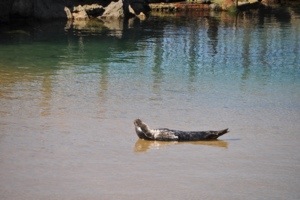
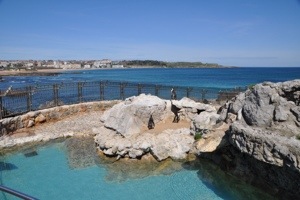
Next door was a bit of an outdoor zoo with some seals and penguins. The vista on the whole walk was amazing, overlooking ocean beaches and the entrance to the river, with a very impressive island with lighthouse perched on top. Everywhere in Santander, they sell pictures of this lighthouse in a violent storm with what must be 20m waves crashing over it.

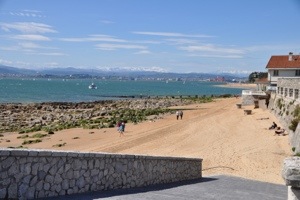
We headed back to the boat, which was parked off a nice beach towards the river mouth. There were people everywhere enjoying the sun – there were even bikinis on the beach. And there I was in my gumboots and coat.

Back at the boat we set course for San Vincente De La Barquera, 30nm away.20130414-103219.jpg20130414-103301.jpg20130414-103433.jpg20130414-103541.jpg20130414-103557.jpg20130414-103644.jpg20130414-103725.jpg20130414-103738.jpg

20130414-103954.jpg

20130414-104009.jpg

20130414-104021.jpg

20130414-104037.jpg

20130414-104050.jpg

20130414-104201.jpg

20130414-104149.jpg

20130414-104331.jpg

20130414-104338.jpg

Guggenheim and Cianza

Bilbao…..

DSC_0117

Got a message from Rob, when I said we were off to Bilbao – he said “enjoy the Guggenheim and the Crianza”.

The Crianza had me stumped for a while, everyone’s heard of the Guggenheim but I’d never heard of a place called the Crianza!!!

Like all good research, its best to start off in a bar and it turns out thats the perfect place to work out Crianza – because it turns out that Crianza is their very good wine.

DSC_0126

Anyway back to our adventures in Bilbao…..

After some more unsuccessful VHF calls to both marinas, we decided our best strategy was to pull up on the collector jetty and go from there. So off to Getxo Marina we went and pulled in behind a Spanish yacht that had just got back from an expedition to Antarctica, with a very nice Spanish girl who spoke pretty good english. We were off and running.

From there, we went up to the marina office and filled in some forms saying we’d lobbed up in Spain. We weren’t quite sure but we suspected that we’d successfully checked in to Spain.

DSC_0148

So off we went up to explore Getxo. We found the Tourist Bureau and asked where we could buy a wifi hotspot – as our French Wifi had stopped working. We were directed up the hill to the old port town of Getxo, where we found another Orange shop and signed up for some Spanish prepaid SIM cards. In between we had to go back to the boat to get a passport as this was needed to buy a SIM Card evidently.

With a bit of other shopping done, it was back to the boat, for some lunch before setting off again into Bilbao. Which turned out to be a good strategy, as several guys dressed in lifejackets and crash helmets knocked on our hull and announced themselves as Customs. They were really nice and spoke enough English to make the whole process pretty smooth.

DSC_0134

Joan and Allan decided to explore Getxo some more, whereas I was itching to get into Bilboa proper. I wandered up to one of the metro stations and hopped on a very modern train and half an hour later I was in the centre of Bilbao.

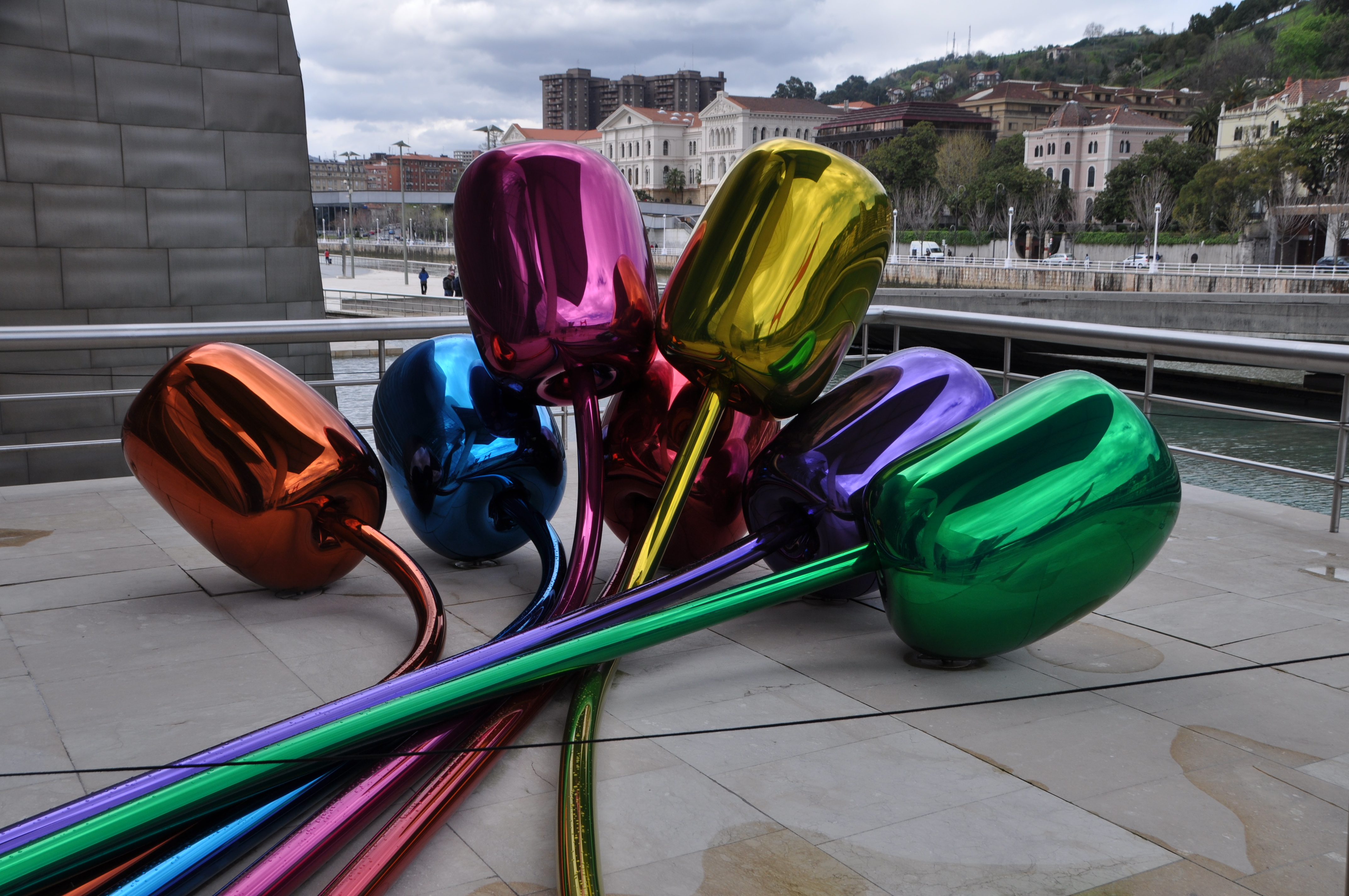
It took a while to get my head around the Spanish street names and to be able to navigate off the street map. I made my way to the Guggenheim, which was closed on Mondays and took a heap of photos outside – its titanium exterior is one of the most photographed buildings in Spain.

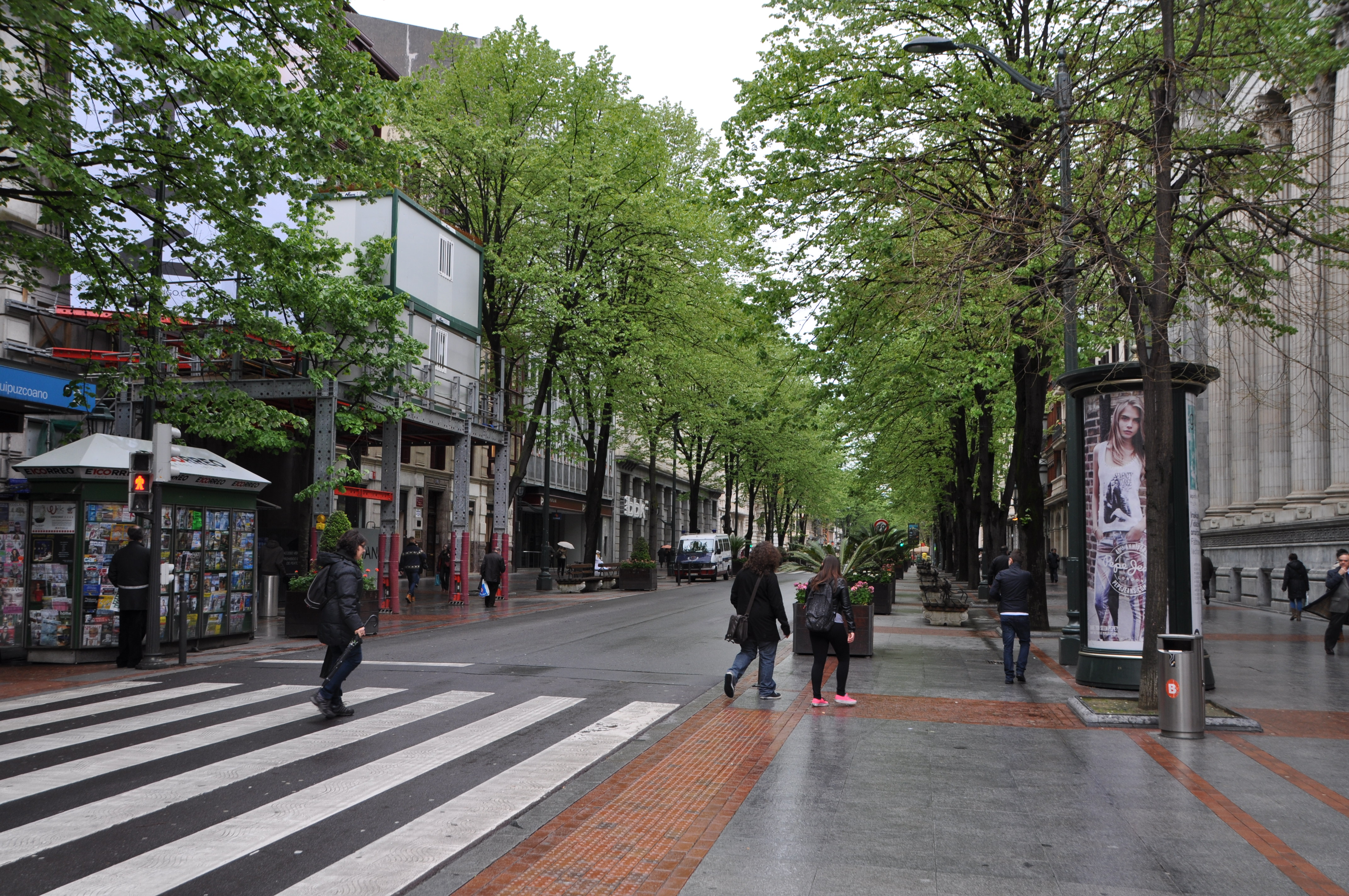
Then I took a walk along the expansive boulevards that run along the river to the old city, with its narrow streets, old churches and tapas bars. Called in for a drink, it was only about 7pm so too early for dinner. After exploring the old city, crossed over the old bridge and back into the centre of town where I’d previously spotted some rather trendy Tapas Bars. The food is all laid across the top of the bar and you just chose what you want. You keep count and tell the bar person, when you are finished. 3 Tapas will more than fill you up – I had 4! At 2 Euro each plus 1.70 Euro for a glass of cianza it was a bargain.

Next morning, we visited the chanderly for some more boat stuff. Its a lot cheaper in Spain than France (or Australia) so we picked up a second anchor – a 16lb Fortress. We will run it in series, 7m in front of our main Rochna anchor when we need to.

DSC_0039 DSC_0114 DSC_0105 DSC_0101 DSC_0094 DSC_0085 DSC_0082

After lunch, we hopped on the metro again and headed back into Bilbao. Its was Tuesday (from memory) and the Peggy Guggenheim was open. We wandered through for a couple of hours but it didn’t seem as good inside as the ones in NY or Venice – there was some Picasso paintings and a single Dali, as well as an Andy Warhol Marilyn montage. But outside, it was simply stunning.

Then along the other side of the river to the old city and then an interesting search for a courier than could send something back to Oz. Not as easy as it seems. Eventually called into the Carlton Hotel and got them to arrange their courier.

Back at the boat it was time to get organised for the mornings departure to Llanes.

20130413-102543.jpg

20130413-102629.jpg

20130413-102720.jpg

20130413-102817.jpg

20130413-102832.jpg

20130413-102849.jpg

Across the Bay of Biscay to Spain

Once in the Gironde we quickly discovered there’s no a lot of good harbours between there and the Basque country at the bottom of France. And to complicate things, there’s a firing range that extends 45nm out to sea. We also discovered another one further out that the guide books and web sites don’t mention – but it wasn’t in use as there was a ton of fishing boats out there.

With this information to hand, we decided it was time to do our first overnighter and head for Spain. Bilboa seemed to be the logical choice – it was more or less straight down, whereas San Sebastian required us to cut in again.

So Bilbao it was.

We set off at 1pm so that we crossed the bar at high tide and then turned south. Allan and I split the watches between us. We started with 2 hour watches and then pushed them out a bit at night.
 

Crossing From France to Spain

DSC_0020 DSC_0027 DSC_0028 DSC_0034

The wind was annoyingly on the nose but we just got enough angle and didn’t have to do too much tacking, sailing a lot of the way. The swell wasn’t big – maybe 1.5m but it was confused and not as nice as a bigger regular swell that we are used to off the west coast of Australia.

The wind dropped away in the wee hours of the morning but picked up to 30kt as the sun came up and we approached the Spanish coast. We passed a few fishing boats on the way in to Bilbao. The entrance is a little tricky as there is a breakwater that is underwater (but shown on the charts).

Once past the breakwater it’s about 5nm in to the port city of Getxo, where we dropped anchor. We tried calling up a couple of marinas but being a Sunday, nobody there spoke English so we thought we would have a good nights sleep and check into Spain with clear heads on Monday morning.


Royan and Bordeaux


We made an early start the next morning for Royan at the mouth of the Gironde Estuary. It was a crappy start with 35 knot winds (gusting to 40+). By early afternoon we had rounded the top of Ile D’Oleron and conditions started to ease.

Whilst motoring along, we noticed that the engines did not appear to be supplying any current to the batteries. Either a BMS problem or a smart charger problem or both???

Royan is about 14nm down the Gironde River, and the entrance to the Gironde has a reputation of being nasty in the wrong conditions. Although there was a bit of a large swell running, it was fine for us. Shame the current wasn’t in our favour though – we had 3 knots of current against us as we gave the two 75HP yanmars a good workout. We arrived late in the afternoon but the Capitainerie office was closed so we tied up on the reception jetty for the night and found a nice little restaurant for dinner – something to do with someone turning 52 (evidently). The local mussels were fantastic (and huge).

We checked the next morning and found if you stay two nights you get the third night free. We ended up staying 6 and paid for 4. Ooroo 1 had stayed in La Rochelle waiting for a new sail to arrive but they followed us into Royan the following day.

Royan is a cute little French holiday town with good facilities. Whilst walking around the chandlery shops looking for a better set of electronic charts (Lagoon only supply silver Navionics charts – another trick for young players) for the chart plotter we found another Robin Marine. Bonus we thought; we could get them to fix the smart regulator and BMS. We also needed to fix one of our underwater lights which never worked since La Mischief hit the water. We’d tried to put La Mischief up on the hard in Les Sables but a rather large privilege catamaran had taken the spot where we could dry her out with the tides – and then we ran out of time before Easter. It turned out that Royan had a much better place to put La Mischief on its keels and with Robin Marine there we could also get them to do it.

Double bonus when the guy running Robin Marine could speak reasonably good English. David turned out to be a really nice helpful guy and even offered us his car if we needed it. He arranged to come down the next morning with an electrician to have a look. They spent hours on the phone to their Les Sables D’Olonnes office to try and resolve the problems. Eventually they had to get someone to drive down to Royan to fix it properly (rewiring the shunts and reconfiguring the BMS). According to Allan, the moral of the story is – “don’t believe everything someone tells you – especially if he is a pretty-boy Frenchman named Pierre”.

Royan also marked the end of Cas French adventure. Back home to the kids and family. We hired a rental car and drove down to Bordeaux so that Cas could catch a high-speed train direct to Charles De Galle airport. We left Allan and Joan to themselves for a couple of days on La Mischief, which they used to good effect helping the French economy.

IMG_0393 IMG_0397 IMG_0396 IMG_0395 IMG_0394


Cas and I had a great drive along the back roads towards Bordeaux. We stopped off in a picturesque French village called Conac and called into a bar for a coffee. It turned out to be run by a Scottish couple and the clientele were all Scottish or pommie. Interesting to get their take on living in France.

Then we called into Blaye on the recommendation of Allan and Joan – what a pretty place with its extensive fort along the Gironde. The Gironde is massive – navigable by big ships all the way to Bordeaux.

Then onto Bordeaux, where we got a hotel right next to the railway station. It wasn’t the nicest part of town, but we caught a groovy tram into the old town and visited one or three bars. We hooked up with some Uni students and played the worst game of pool ever, before visiting another bar with them. We got back to the hotel somewhere between 1 and 2 (I think).

Next morning we had to drag ourselves out of bed at 6am to get Cas on a train. That was hard. Goodbyes said, I went back and got a bit of sleep and some breakfast before heading back to Royan.

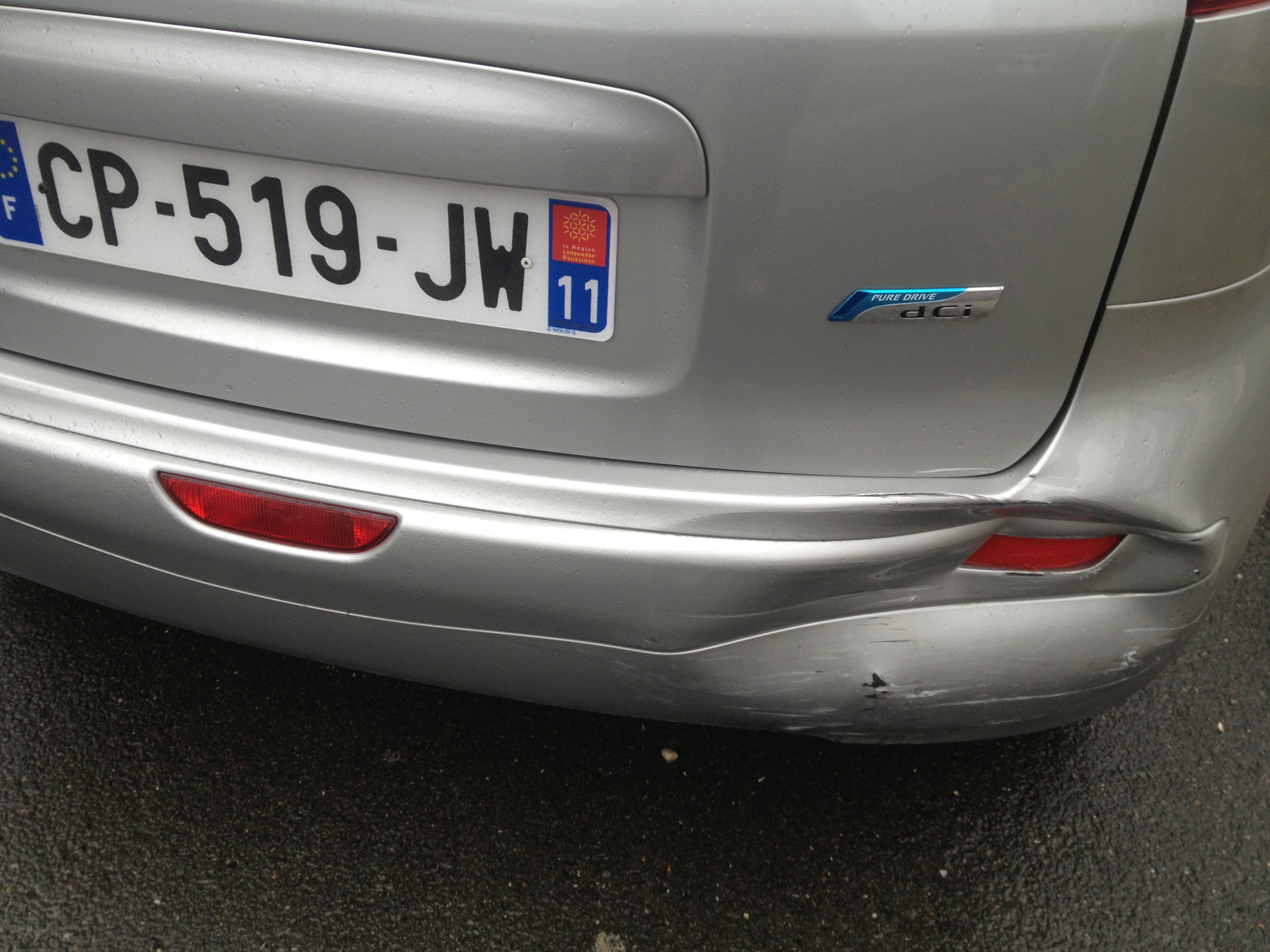
Had Google Maps telling me the way, when the road branched in two with a red traffic light in the middle. I stopped and waited for it to change. I must have been there about 15 seconds when I felt a bump from behind.

The bump was supplied by a Mazda 626 driven by a nice French girl called Fannie (Allan had fun with that one). We went round the corner and she helped me fill in all the forms (they have a standard accident form in France) and off I went rather timidly back to Royan.

After using the car to do some shopping, we returned it the next day and I was releaved to hear the Avis lady say that the accident wasn’t my fault as she ran into me. You never know in different countries what the regulations are. It’s a first for me – being in a road accident in an overseas location.

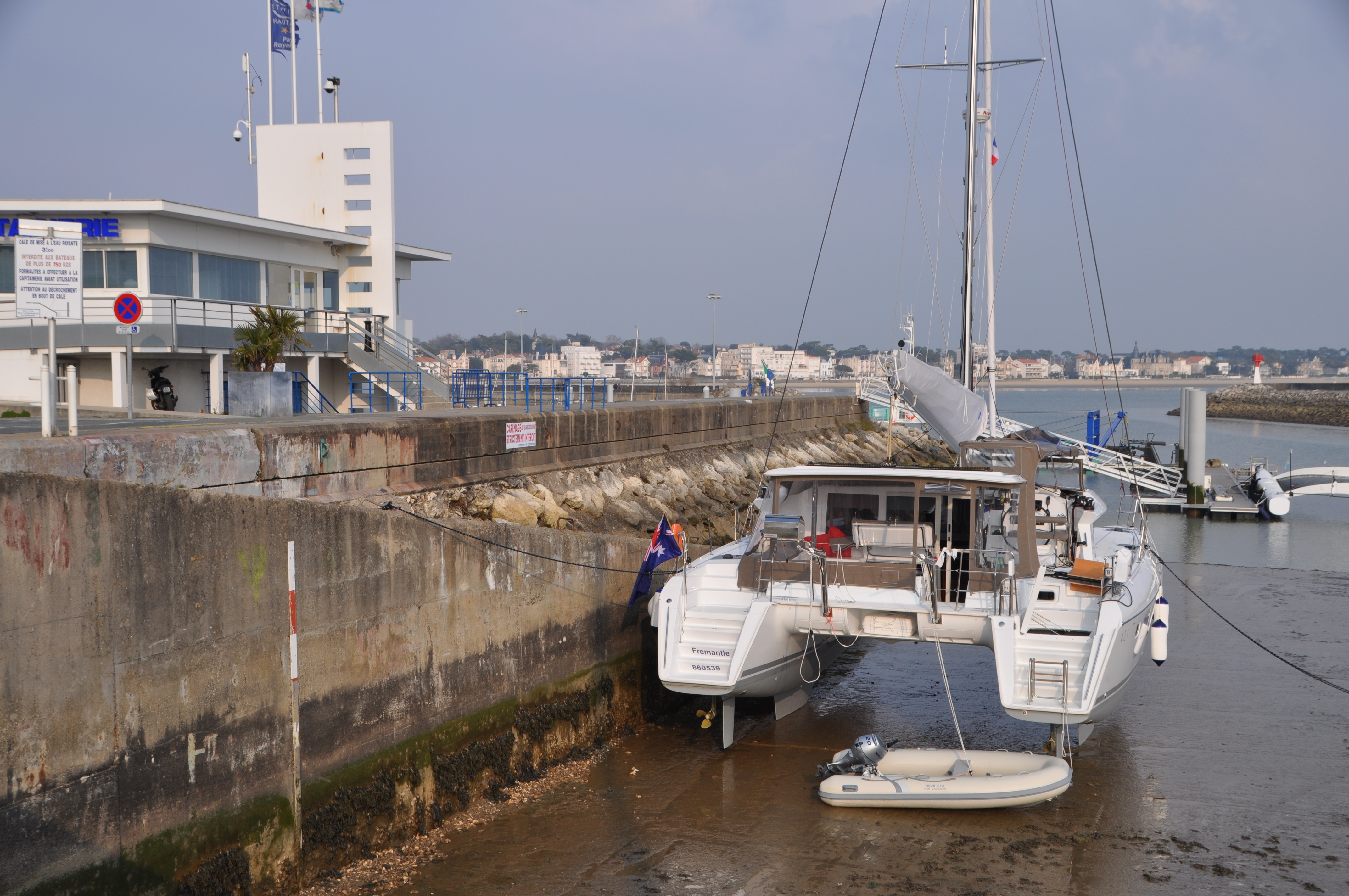
That afternoon we parked La Mischief on a flat concrete pad next to a high wall and waited for the tide to go out. A few hours later, David could get to the light to replace it, which he did successfully. Four underwater lights now work.

High tide was then at 2pm. We got liftoff at 12.50 and waited to high tide when there was about 40cm of water under the keel to move back to our berth. We’d taken the opportunity to calibrate the depth instruments, so now we know exactly how much ware there is under the keel.
With our jobs all done, we had a good sleep and left Royan on the tide heading for Spain.
DSC_0002 DSC_0007 DSC_0017 DSC_0557 DSC_0556 DSC_0560 DSC_0562 DSC_0565 DSC_0564