Having stayed in Egypt slightly longer than we’d planned, it was time to get our skates on and get La Mischief ready to roll in only two days. My first job was to fix the toilet, now that I’d managed to get my Jabsco servicing kit through Turkish customs for an exorbitant fee. Next time, I’ll use normal post, rather than UPS as Turkish customs don’t tend to worry about packages in the post (I did this with my Watermaker winteriser pack I had sent from France).
This first job was an abject failure as the chopper I’d left soaking in a bucket disappeared to the bottom of the marina. Bummer. We quickly arranged for a new one to be purchased by Barbara from West Marine in California – to be delivered personally when Joe and Barbara arrived in a week. Luckily we had a couple of spare working heads on board.
Next job was more of a success. The three new batten cars that I bought in Perth were fitted successfully, although the third batten car keeps pulling out under the stress of the square rig.
Dee had taken our broken Raymarine Autopilot head back to the USA and had scored big time, getting a free replacement even though the unit was out of warranty. This was after the guys in Gocek tried to sell us a new unit. Thanks Raymarine.
The rest of the jobs were largely putting back stuff we’d stored inside for the winter and getting the boat somewhat clean. The marina at Karpaz was cheap but any services we would have liked done were not. We looked at lifting La Mischief and getting her bottom painted and top and sided waxed and polished, but the costs were pretty steep so we gave that idea away. I’d previously looked at getting the engines serviced but I’d quickly worked out this was a bad idea so my cunning plan was to sail back to Gocek and get Sanli to organise it.
Jobs somehow always get done in time and off we went. Ozge, a friend of ours from the Marina, came along to help us out, and the 3 of us got going about 10am after we managed to complete our formalities and leave our berth. We’d tossed up a few destinations and in the end we settled for Kas, 230nm away. When you leave the Turkish Republic of Cyprus, you need to go to Turkey as Turkey is the only country in the world to recognize the Turkish Republic of Cyprus. After Turkey, you can go wherever you like.
We arrived in Kas at 8am having motored for 2 days on a glassy sea. We called in to the old harbour (rather than the new marina) and were met by an agent, who for 200 turkish lira, checked us in. Then it was off to catch up with our friends from Kas. It didn’t take us long to catch up with Smiley, still as useful as ever. He organised a diver to help with our awful looking bottom, it was a complete ecosystem down there. We got our gas bottled swapped and did a few other chores before catching up with Mutlu at his beach bar. Then it was off for a great meal at Smiley’s, which felt wonderfully familiar.
Next morning it was up at the crack of dawn, Ozge feeling the effects of the Raki from the night before was moving noticeably slower. The wind was still non-existent so we stopped and anchored off the beach at Olu Deniz and had a look at the lagoon.
Then it was onto Gocek for our date with Sanli and his team. All four engines received a service, our decks were waxed and polished, our stereo was replaced by a Fusion unit I picked up in Perth along with replacement speakers for the back (they were falling apart after a couple of years) and new waterproof Fusion speakers for the front installed under the eyebrow.
As Sanli was getting this all organized, I was putting together the toilet – lucky me – I always get the good jobs. Dee meanwhile had picked up Barbara and Joe and was showing them all the sights around Gocek – Saklikent Gorge, Dalyman River Tombs and Pinara. Meanwhile Ozge said his goodbyes and caught a plane back to Ercan via Istanbul.
Then it was off sailing once more, first to Fethiye to check out of Turkey and then to Rhodes to check into Greece. We left Fethiye in zero knots of wind and ended up in Rhodes in 40 knots of wind, right on the nose of cause. Welcome to windy Greece. We checked into the largely empty Rhodes Marina for 57 euros a night, too late to check into Greece so we had a quiet night on the boat. Next morning it was a 2km walk into town to visit the Port Police, Customs and Immigration, before checking out the old town with its wonderful castle and windy walking streets. Still one of my favourite destinations.
Then it was off to one of our other favourite destinations – Lindos. We had a great sail down the coast, scooting along on a nice reach. Joe and Barbara were loving it. We got to Lindos in the late afternoon to find a couple of yachts there – different to the crowded anchorage we found last time. We got a prime spot right off the beach on the sandy bottom. No wrapping our anchor chain around any rocks this time.
Anchored up, we dingied ashore and walked up to the castle, which had already shut for the day. Then we headed back down into the town and stopped off at our favourite Captains Bar. Saves (Greek for Steve) was there to great us and we reminisced about a few late nights in his bar last season. Then we headed off to check out the amphitheater and across to Ay Apostoli, an enclosed bay on the other side of Lindos where I had my first Greek Mojito of the season – oh how I’ve missed them. Dinner at Stephanies (but not on the roof – too cold) completed a pretty good day.
Next day, it was up to the castle on the top of the headland, breathtakingly beautiful. The girls were keen to go shopping so I retreated to a nice beachside café for some blogging and photo uploading, which takes time in Greece given the piddley amount of bandwidth. Back on the boat, it was time for our first swim of the season in the beautifully clear water of Lindos. An afternoon relaxing before we pulled anchor and headed south towards Kasos, on the way to Crete.
With 4 of us on board, the night went quickly as the winds died and we motored all the way. We arrived in Kasos at about 9am and had to administer mouth to mouth to see if we could possibly solicit any life out of the place. We pronounced it dead as a door nail and decided to make our own life. We bought fresh fish from a local fisherman and had it cooked at Mylos Restaurant overlooking the bay. Two other cats had pulled in and we met up at the restaurant to breath some life back into the town. One cat was Canadian, the other English and they had both been wintering in Crete at Agios Nikolaos, and had good things to say about it.
With another night sail coming up, we had to curb the wine and beer, in time to sober up for our 6pm departure.
The sail to Crete was pretty uneventful, with flat seas and what wind there was, was on the nose most of the way. We managed to get to our destination ahead of sunrise, so we floated around until 6.30am and then went into Spinalonga.
With a direct flight from Larnarca in Southern Cyprus to Cairo, it was just a matter of dropping our hire car at the border crossing and having our friend Ozge pick us up from there and drive us across the border to Larnarca airport.
A 90-minute flight and we were at Cairo Airport. And then the fun began. We went to the ATM and withdrew some Egyptian Pounds to pay for our visas, which you pick up at one of the two banks inside the terminal. Trouble was, they only accept US Dollars and Euros, not their own currency. Mmmm. Problem. We talked to Egypt Air and they suggested talking to the Police. In the end, Dee convinced them to take our pounds, which one of the more seasoned travellers told us they had to do.
Egypt is really struggling for foreign currency given the economic predicament they find themselves in. They import just about everything and with tourism having dried up since the 2011 failed revolution, things are pretty tight. There’s actually 3 exchange rates. The official one, the Bank of Egypt one and the black market one. Suggestion number 1 is to bring as many US Dollars as you feel comfortable doing. And lots of $1 notes for baksheesh, as everyone expects a tip.
Once through the airport, we got ourselves Egyptian SIM cards from the Vodaphone counter at the airport. 95 Egyptian Pounds (about 11USD) for unlimited talk and text plus 3GB of data for our 3 weeks. We’d arranged a driver for $35US to take us to the hotel, but this was a bit of overkill as taxis are dirt cheap. With taxis we got them to use the meter and tracked them with Google Maps, just to keep them on the straight and narrow, which most of them were. You can also negotiate a rate, after you’ve talked to someone at the hotel or airport who will generally let you know what’s reasonable. And then you’ve got to add a tip (banshee) on top of this at the end, but the Egyptian pound is so cheap that this really isn’t much. The trick is to may sure you get enough small notes – not easy as nobody wants to give up their small change.
We splurged a bit in Cairo and stayed in the Intercontinental, right on the Nile. Hotels are really cheap at the moment so it was our big change to stay in something top end. Well top end for Cairo.
Next morning it was off to the Pyramids – of course. We’d arranged a tour through Emo Tours, who were the guys who picked us up from the airport. Having now experienced Egypt, we would probably find a good taxi driver and negotiate a day rate with him. For the Pyramids, I would also organize an Egyptologist, probably by getting the Taxi driver to find us one as well. We used a Taxi driver in Luxor to great effect and we like this strategy.
Having said that, the tour was great and he took us across the Nile to the Giza side, where all the old Egyptian stuff is. The tour was in chronological order so the first stop was Memphis, which was where the Great Egyptian dynasties all kicked off, way back, 5000 years ago. Memphis was the capital of Ancient Egypt for over eight consecutive dynasties during the Old Kingdom. It has a few cool statues including a huge 10m statue of Rameses 2, lying on its side, but the city is pretty much gone now so a 30 minute stop is all that’s required.
Next stop was Saqqara, where the famous Step pyramid of Djoser is. Saqqara was the necropolis for Memphis. As well as the Step Pyramid, there was also a cool underground tomb as well as some amazing tombs of the nobles, with some colour still left in the wall paintings. Seeing these, you are blown away not only by the age of the tombs and paintings, but also by just how good the art was in these tombs. These guys were great artists in their own right.By now it was lunchtime, and we stopped at a local restaurant from where you could see the Great Pyramids of Cheops. The food was good and the view excellent. After lunch, we went for a closer look. Our guide explained that this was a renowned pick pocketing area and went through some of the methods the thieving bast@@ds employed. I’d taken a concealed money belt and left my wallet behind, so we survived with the same bits and pieces that we had gone in with.
It goes without saying that the pyramids were amazing. Not sure what else to add here as it’s all been said before. Unfortunately the haze of Cairo makes it difficult to take photos that do them justice.
After wandering around a few of the pyramids, we headed down the hill to the Sphinx, which is evidently the biggest carving made out of a single piece of stone. Again its simply wow. It’s deteriorating fast so hopefully they find a way of preserving it. We snapped away with heaps of photos, it really is quite mind-blowingly fantastic.
They were setting up for a concert in front of the Sphinx and unfortunately we found out later that it was Bryan Adams – would have tried to get tickets if we could have.
Instead we had dinner at the hotel and walked around downtown at night. Once we had learned the art of crossing the road we were right. It is an acquired art – our strategy was to line up behind someone else crossing the street and use them as a sort of human shield. Must have worked as I’m now writing about it.
There are 22 Million people in Cairo – roughly the size of whole of Australia, and they all seemed to me to be out shopping or driving that night.
Cairo traffic is an exercise in the chaos theory. Traffic lights are only ever obeyed if there is a policeman present. A three lane highway is really a five lane highway and horns are a regularly used communication mechanism. Amongst all this are some taxi drivers who are convinced their taxi is a F1 Ferrari, and weave in and out of the traffic with millimetres to spare.
Despite this, it was nice wandering the streets. Everyone was very friendly and loved to stop for a chat, although a few times this lead to them taking us to their shop or their uncle’s shop. We weren’t worried walking around at night as there were people everywhere and people were quite relaxed and happy.
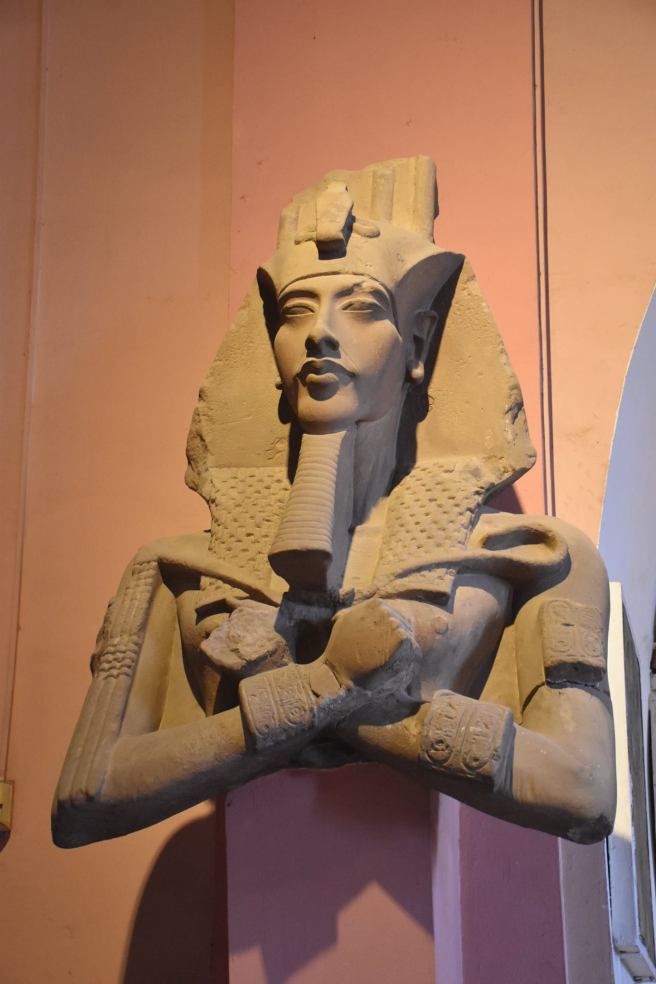
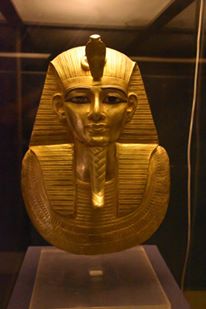
Next day, we walked around to the Egyptian Museum. We arrived pretty much as it opened and headed straight upstairs to King Tukenkarmen’s exhibit. It was mindblowing to see the famous mask. And we had the whole room to ourselves. There was a heap of stuff they’d recovered from his tomb and it was all there, glittering away. Unfortunately no photos were allowed so you will have to go and see it for yourselves.
This was pinched from the Internet
The rest of the museum contained lots of amazing stuff – very old and ancient stuff from 3500 years ago to Greek and Roman times. The museum building was beautiful but poorly kept. The exhibits were scattered and information was scarce, and for one of the World’s great museums it needs a major facelift and some real organization. There’s been talk of rehousing it forever but nothings happened. Maybe they need to increase the admission price for foreigners to fund this.
It took us a good 2-3 hours to see everything, and once done we wandered down to the river and caught a local ferry for a couple of Egyptian Pounds each (about 40c aussie). The ferry didn’t quite get us to old Cairo so we hopped in a Taxi. Taxis are incredibly cheap if you use the meter AND google maps to stop the driver taking off in a completely wrong direction To be fair, this only happened to us once where we had to stop the taxi and get another one.
Old Cairo was our next destination, which dates back to early Christianity, before the Arabs brought Islam to Egypt. We visited the Coptic museum and a few nice old Coptic Churches, which are essentially Greek Orthodox. Interesting history of early Christianity. Next it was a short taxi ride to the Citadel and Muhammad Ali Mosque. They call Cairo the City of 1000 mosques and we managed to knock off a couple of impressive ones as well as a pretty good citadel. We finished off the day with a trip to the huge bazaar at Khan el-Khalili, where we got lost wandering through the many little alley ways of this extensive souk.
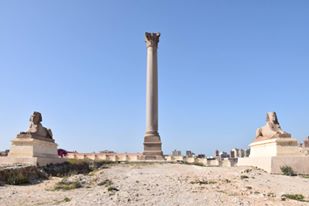
Next day we took a trip to Alexandria by Taxi. Our first stop was Qaitbey Fort on the water of the Mediterranean. Then we had a shot at finding Rasel-Tin Palace on the water, only to find the problem of taking a Cairo taxi to Alexandria – they tend to have no idea where anything is. In the end we found it sort of, it was closed as it was used by the military these days. By then it was time for lunch, so it was back to a Greek fish restaurant by the Yacht Club for a nice view and some food. Next stop was Pompeii’s Pillar, somewhere our taxi driver had no idea how to get there. Luckily Mr. Google did – sort of. Alexandria’s traffic jams are every bit as good as Cairo’s if not worse, and after several wrong turns our taxi driver made it, just before his nerves completely gave way. Pompeii’s Pillar is 30m high, making it the largest column in the Greco-Roman world. There’s also a couple of sphinxes at the front of the column but that’s pretty much it. But the pillar was worth a look. Then it was off to the Alexandria Library, or so we thought. Our taxi driver had no idea of how to get there and kept stopping to ask along the way. When he missed a turn to get there, he just gave up and headed back to Cairo, leaving two unhappy campers in the back seat. It was all too much for him. And so we ended up going all the way to Alexandria and seeing two things.
And to make matters worse he didn’t take the main road back, instead we drove through the delta, which took forever. This was a real bummer as we were due to catch up with Ahmed, who used to work with us in Australia. In the end, we got there and caught another taxi out to some nice botanical gardens, where Ahmed had suggested a great restaurant. Ahmed is living in Cairo before he returns to Australia later this year and it was great to catch up. Ahmed gave us a lot of good info about Egypt, as well as talking a bit about IT of course.
So that was Cairo, and Alexandria. Next day, it was up early to fly to Luxor. We got there at 8am and got a taxi to our hotel right on the Nile. Hotels were dirt cheap and we could pretty well pick and choose. The driver ended up over charging us, so no more business for him. Instead the next taxi driver we used turned out to be wonderful. Hamdi took us everywhere for a couple of hundred Egyptian Pounds a Day ($20AUD). On our first day we did the East Bank, and were blown away by the giant statues and wonderful carvings at both Luxor Temple and Karnak Temple.
Karnak Temple was just so big with rows and rows of columns. Overall it covers 123 hectares and simply blows your socks off. In between visiting the Temples we checked out the Luxor museum, which was brilliantly presented (especially when compared to the ramshackle displays in Cairo Museum).
Next day, we headed over the Nile to the West Bank. Ancient Egyptians used to live on the East Bank and bury their dead on the West Bank; on the basis that this is where the sun went down. First stop was the Temple of Queen Hatshepsut (Hot Chicken Soup) at El-Deir. It was very striking, set back in a natural amphitheatre at the foot of steep oche coloured cliffs.
Then it was off to the uber famous Valley of Kings. We bought our tickets – which allowed us to pick 3 tombs to visit and paid an extra 50LE for Rameses 6 Tomb and one other tomb, which was mind blowingly fantastic. A lot of the tombs were closed because it was low season, and we passed on King Tut’s tomb as it was evidently nothing to write home about, as everything is now in the Egyptian Museum in Cairo.Next stop was the Valley of Queens, which was a bit of a let down after the Valley of the Kings. We were disappoint to learn that they only open the Tomb of Nefertari for special groups of people who pay a lot of money. It’s supposed to be pretty special given that they spent $2 million restoring it.
After a really nice lunch in a mini-oasis, it was off to the Rameseseum, an open-air site that the Louvre is still excavating. It’s a vast area where archeologists have rebuilt monuments once new discoveries have been made. It was a long day by the end and we finished off by checking out the Colossi of Memnon, a couple of famous tall statues that mark the border between the cultivated land and the desert where all the tombs were.
But the day wasn’t over yet as we took the opportunity to see the light show at Karnak Temple at 8pm that night. That was pretty cool, wandering around a 3000 year old temple at night, listening to the stories from those times.
The next day, we got Hamdi, at his suggestion, to drive 2 hours through the countryside to Dendarra, a brilliant temple with really cool colourful columns in the inner halls. It turned out to be one of our favourite temples and well worth the drive through the country-side with tractors piled high with sugar cane and lots of fruits and veggies.
Then it was back to Luxor to fill in the afternoon with all the stuff we hadn’t yet seen on the West Bank. The authorities wouldn’t let tourists travel on the desert road that goes to the west of the Nile so we had to take the long way around.
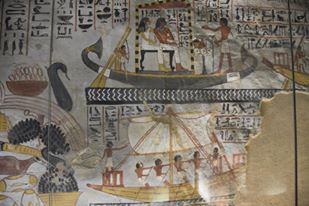
Once we got there, we checked out the Valley of the Nobles and the Tombs of the Workers, both of which were quite impressive, before going to the Temple of Seti and then onto Howard Carters House, which was set out as he had it in the 1930’s when he lived there. There was a replica King Tut tomb at the back of the house and that was good given I’d passed on seeing the one in the Valley of the Kings.
Next day, we checked out of the hotel and onto the M/S Royal Ruby, for our trip down the Nile. We passed on the Luxor tours that the boat ran as we’d already done them, and instead took the opportunity to wander the souk, checking out the little stalls selling everything and anything. We finished the day with a drink at the famous Winter Palace Hotel, where Agatha stayed and wrote Death on the Nile. A Gin and Tonic was sort of obligatory!
Next day, it was off sailing down the Nile. We sat on the top deck, watching the world go by – very relaxing. It was still a bit cold to swim in the pool so the quick dip we had was very quick. We got to the locks just on dark, and managed to beat most of the other river boats so we didn’t have to wait too long. Then we motored up to our overnight stop in Edfu.
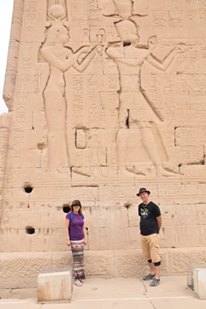
The next day it was up early and off to Horus Temple by horse and carriage. We spent about an hour wandering around the Temple with our guide, filling us in on a lot of Egyptian mythology, before heading back to the boat.
Crocodile Mummies
The rest of the day was pleasantly spent cruising down the Nile, peering out over our white wines as the countryside drifted by. As night fell, we visited the wheel house and had fun with the Captain as we watched him bring the boat to the dock in Kom Ombo. Here we had a night time visit to the Temple shared by two gods Sobek & Haeroris. Outside the temple, Dee got to play with a couple of African Cobras, that had had their venomous teeth removed – evidently! After yet another interesting and beautiful temple visit, we had dinner and then went to the bar for an Egyptian Galabya party, where everyone dressed up in trtaditional Egyptian garb. A whole lot of Egyptian Archeology Students from Alexandria rocked up on board in Edbu and we had great fun dancing with them all – along with having numerous selfies taken with them all.
Next morning, we woke up in Aswan, our final destination. After breakfast, we hopped on a traditional felucca for a sail on the Nile. We visited a botanical garden set up by Lord Carnarvon on Kitchner Island, which had trees and plants from just about everywhere in the world. Then we transferred to a outboard engine powered boat for a trip through the cataracts past yet more islands to visit a Nubian Village. The Nubians are the locals that live on the upper Nile and into Sudan, dark skinned people who dress really colourfully and live life to the full with lots of music and laughter. We drank tea and listened to a wonderful sing along. Hopping back in the boat, we headed back to the Royal Ruby passing Elephantine Island, with its elephant like rock formations that give it its name. After lunch, we jumped into a car and drove over the low dam built in the 20’s to the high dam, built in the 1980’s. Lake Nassar is huge, and the dam was quite interesting in it enormity. Another drive and a boat trip saw us at Philae Temple, which used to be on another island until UNESCO moved its 11,000 pieces to a higher island that escaped the clutches of the rising waters from the high dam. That night was our last on the Royal Ruby and we were treated to a Nubian floor show. Very colourful.
Next day we left the boat and checked into our hotel right on the Nile. We then caught a local ferry across the Nile to the Nobles Tombs on West Bank. These turned out to be really interesting and we were quite surprised that the cruise boats didn’t include them on their land tour itinerary. Another local ferry back and we checked out the Souk – my favourite in Egypt. It ran for miles, one street back from the Nile. Then we caught another local ferry across to Elaphantine Island, where we wandered around until we got to the Museum, which turned out to be closed. We hopped on another boat and headed off for a drink at the Old Cataracts Hotel, another Nile institution. It was quite spectacular, sitting there, drinking wine overlooking the Nile with feluccas going back and forth between the cliff we were perched on and Elaphantine Island. Tough life.
After drinks we hopped on another river boat and went down the Nile to our Hotel. The Nile in Aswan is at its most stunning and it was great to get out on it whenever we could.
Next day, it was up early and off to Abu Simbel, one of the highlights of Egypt. We took a tour and it was a 3 hour min-bus ride there across the desert, heading along Lake Nassar, near the Sudanese border. Abu Simbel is pretty much famous around the world having been “moved” up above the water line of Lake Nassar, before the lake could cover it. The magnificent great temple was built by Rameses Number 2 and boy did Rameses love himself, given that all the huge carvings of himself – makes The Donald look a bit look shy and reserved in comparison. The 4 statues at the front are carved into the rock face, all Rameses 2 and measure 20m high, bigger than the giant ones at Luxor. Inside is really interesting too, a huge space cut out of the rock, with more statues of the good pharaoh along with painted scenes of the battle of Qadesh against the Hittites that he evidently fought magnificently in. Next to the Great Temple is the smaller Temple of Hathor, dedicated to his wife, Queen Nefertari. Interestingly, the good queen was a Nubian, from this part of the Nile, which is one of the reasons that historians believe Rameses built these temples so far south. If the Great Temple wasn’t there then this would be mind blowing in its own right.
Temple visiting over, we sat down for a quick lunch of Nile fish, overlooking Lake Nassar, before doing the 3 hour drive back again.
Next morning it was onto a felluca again, to the other end of town where we visited the Nubian Museum, another great museum about this part of the world. Then a short taxi ride to the other museum in town, the Aswan Museum, which was so so. Another taxi ride to the unfinished obelisk. It was a half completed obelisk, half carved out of the granite rock. It would have been the biggest obelisk in the world if they had managed to finish it, somehow move it and stand its 1200 tonnes upright, making it 42m tall.
Then it was back to the Hotel for a swim, before we took another taxi to the train station for our trip back to Luxor. We caught the 5pm VIP train, which was a very pleasant trip along the Nile, right up to the point we got off in Luxor on a dirt platform, which made pulling all my dive gear in it’s wheelie bag a touch challenging. Our favourite Egyptian taxi driver, Hamli was waiting for us and took us to the Sheraton for our very short second stay in Luxor.
Next morning, Hamli was there again to take us to Hurghada on the Red Sea. It was a 4 hour drive through the desert and cost us 600 Egyptian Pounds – brilliant.
The whole Red Sea scene had been badly hit by the Russian Plane highjacking and the perception that Egypt was unsafe, so we got the hotel deal of a
lifetime at the Marriott. Our cunning plan was to do day dives and our first task was to walk the streets and find a good dive company.
We finally settled on Panorama Divers, who turned out to be an excellent choice. Shelley was our dive guide and the boat was well set out. We ended up doing 6 dives with them over 3 days before we pulled the pin and decided we needed to find a live-aboard if we were going to experience the best of the Red Sea.
With a short break in Cyprus, it was back in the air again, this time to Geneva, with some rather long luggage in the form of Dee’s skis.Landing at Geneva, we hopped in a 4WD and headed towards Megeve. We’d found a hotel, walking distance from the ski lift and it turned out to be a good choice. Megeve has 4 different ski fields, and Dee managed to ski all four whilst I re-acquainted myself with the art of (un)controlled falling down a snow-covered mountainside. The Megeve town was postcard perfect, complete with cutesy churches, Xmas trees and bars selling mulled wine.
After 4 days skiing, it was time to take a day off and head to Chamonix, another of those cutesy (but expensive) famous ski towns. We managed to find Dee’s favourite restaurant from years ago and enjoyed a nice Valentines Day lunch overlooking the river.
Our next stop was La Plagne, where we had some of our best skiing. La Plagne is linked to Les Arcs by a huge gondola, which carries over 100 skiers at a time. By this stage I was starting to enjoy skiing Red runs and was feeling comfortable zipping down the mountain. That was right up to when I was half way down a really nice red run that went for miles, when I hit a section with some really gnarly moguls.
Somehow I’d managed to skip the Moguls 101 class and I came to grief on a turn. My skis stayed on and I thought I was going to break a leg. In the end I (only) managed to tear my calf muscle quite badly. I managed to get over to a blue run and slowly skied down on half a leg – until I made it to the bar where I stayed for the rest of the afternoon until Dee was able to ski back to our hotel and drive around to where I was – a good couple of hours later.
Next day I could hardly walk, so I confined myself to the small village whilst Dee skied. Then it was time for another rest day anyway, so we headed off once more to Alp D’Huez, spending most of the day driving there. It was an interesting drive up to the resort, looking at signs with all the winners of the Tour De France that had to ride up the 20 something switchbacks to the top. As my friend Spike did last year in a moment of madness. Alp D’Huez was where I got back on the bike (skis) and tried a few easy green runs to see how I went. I struggled at first but then managed to do some blues by the end of the day. Dee meanwhile had skied all over the mountain and declared it DONE, so we checked out the next day and headed for Italy. On the way we went through a very, very, very long tunnel – over 20kms. I was excited to roll up in Piedmonte and enthusiastically checked out the wine lists and bottle shops as soon as I got there – there being the cute village of Sous Deux. There were a few good wine bars that got checked out that night if I can remember rightly.
Next morning it was off to find the snow. We got to the bottom of the lifts to see a thin covering of snow. Not good. As we went up the lifts we could see more ice than snow. The first run was more like ice skating than snow skiing. Our aim was to get across to Sestriere, which we accomplished using a series of ski lifts (both up and down) and not much actual skiing. Once in Sestriere, I found the lifts closed because of wind – I’d like to say high winds, but not really.
Eventually I got to an open lift and had a good few hours skiing on okay snow. Then it was time to find my way back to Sous Deux. This involved going up the gondola and skiing down a goat track. Turned out to be a very icy goat track. It was now snowing with no visibility, and the goat track was a layer of ice-covered by a thin layer of snow. Deadly! Well, deadly to a novice skier with a bad calf. I managed to lose control at speed and crashed, falling on both knees. I remember thinking this snow is really hard as my knees banged into the ice. Ouch. Luckily I hadn’t gone that far so I was able to walk (slowly) up the goat track to the top of the gondola, which took me back to Sestriere. From here, I took a bus back to Sous Deux, my ski trip over courtesy of not one but two non-functioning knees.
Dee was still going strong so we went off to look for better snow. We found it in Cervinia, on the other side of the Matterhorn from Zermatt in Switzerland. Dee had fun skiing across to Zermatt, whilst I checked out the Trauma Centre for a couple of matching knee X-rays and some expensive knee braces.
After Dee had her fill skiing, she graciously put her skis away and we went touring. We headed back to Piedmont to try to find some open wineries, but it wasn’t tourist season and they were all closed. We had a nice drive out of Italy, along a the beautiful Aosta valley, stopping at Roman ruins, historic towns and castles to Courmayeur, where we had a look see but did not stop and ski. Then it was through the Mt Blanc tunnel and off to Annecy for the night.
Annecy is really beautiful, set on the Lake that bears its name, it is sometimes called theVenice of the Alps with its two canals and the river Thiou flowing through the old city. We hit upon a student show at the old gaol that is in the middle of the river that night, which was rather fortunate as the gaol wasn’t normally open to the public.
Next day we headed to Lyon for our last few days of the trip. What a brilliant French city. We had a great time, wandering the various neighbourhoods of Lyon, visiting great churches, historic old town, great museums and squares and monuments. The Lumiere museum was a highlight – Lyon was where the Lumiere brothers did their stuff. We even found time to go and see a Joe Jackson concert – a blast from the past.
Skiing and touring over, we drove back to Geneva and headed back to Cyprus.
Time for some more blogging – hopelessly behind after having too much fun and not enough writing! Back in January when we went from Israel to Jordan……
Crossing the border into Jordan was interesting. First a taxi ride from the bus to the Israeli side of the border. Then a walk to the Israeli customs and immigration offices. Then a short walk across the border to the Jordan customs and immigration offices. Here we presented our “Jordan Pass” and got free visas (as well as entry to a heap of attractions in Jordan – brilliant). Then a bus ride to a gate. Here we needed to catch a taxi a few kilometres to another checkpoint where the driver, George, from our Amman hotel was allowed to meet us.
George turned out to be a real find. The borders in the middle of nowhere so a driver was a good option. And George (who incidentally was an Anglican) was a kind and beautiful person, who filled us in on a lot of Jordan and showed us some wonderful sights as we used the afternoon to check out
Um Qeis with it basalt theatre from Roman times,
Ajun’s great Islamic castle,
and finally
Jerash – wow. Jerash is simply breathtaking – one of the great Roman cities (with some Greek thrown in for good measure) of the empire – a regular hangout of Emperor Hadrian. Impressive gates, two theatres, the oval precinct, colonnades, grand temples, columns everywhere – all largely intact. There was also a reconstruction of a stone cutting machine, powered by water – which predates those man-made machines in China. We could have easily spent another couple of hours there but we had to leave when it started to close at 5pm.
So back to George for the short drive into Amman and to our Hotel, a modest establishment owned by Raymond, a Palestinian born Australian, whose previous Hotel was in Damascus – which he had to abandon due to all the troubles in Syria. Raymond was also super nice and super interesting as were all the staff. And Raymond encouraged all the young aspiring musicians from Amman to come and play and dance at the restaurant so we got a floor show over dinner.
Amman, being the capital of Jordan was mildly interesting. It has a great Amphitheatre and some interesting Roman ruins on the hill behind the city centre. The small shops in the town centre were interesting to wander through and there’s a small restaurant/bar strip where we ate great Italian sans great Italian wine.
With one eye on the weather that was coming, we decided to head out with George to Madaba, then Mount Nebo, and finally down to the Dead Sea. Madame was a very early Christian town and has an extraordinary mosaic map of the holy lands in the Church of St George – originally made up of 2,000,000 pieces of tiny mosaics. Mt Nebo is where Moses died and on a good day you can see across to Jerusalem. And then down to the Dead Sea – literally – as we drove from Amman at 750m above sea level to the Dead Sea at over 400m below Sea Level, the lowest point on Earth – other than of course Freo’s current position on the AFL ladder 😦 . We called into a resort, stripped down to our bathers and had a quick dip – well a quick half dip really as its strangely impossible to submerge any more than half your body. It was pretty cold out, but the water wasn’t too bad. Obligatory photos taken it was back into warm clothes and a warm lunch.
Next day it was time to pick up our hire car – something the guys in the hotel were advising against because a) snow was coming and Amman pretty well shuts down at the merest hint of any snow, and b) they wanted us to keep paying for George. Anyway, we picked up our car and made it out before the snow came.
Our first stop in the Car was the impressive gorge at Wadi El Majib. Well it would have been impressive had it been open. It closes in mid-November because of the risk of flash floods so we only got to walk up a bit of the way on a raised broadwalk.
We then headed into the hills up to Karak. The drive up was spectacular, and the view of Karak Castle as we turned the corner was pretty impressive. Karak Castle is huge, and it looks pretty impregnable. We flashed our Jordan passes and went inside, where you really begin to realize just how big it is. There are dimly lit tunnels and two huge vaulted rooms – each 60m long and one on top of the other. By far and away the most impressive castle in Jordan.
Not so impressive was the accommodation in the town, and with the weather coming in we decided to retreat back down to the hotel strip on the Dead Sea to stay the night.
Next morning it was off to Petra. Or so we thought. We had Google Maps taking over a mountain pass and approaching Petra from the West, but as we climbed up through the mountains the snow started. It started to look iffy as we continued to climb, passing a slow moving snow plough. Eventually we gave up and turned back with the local police closing the road as we passed them on the way down. We then had an interesting toilet stop at a local bakery where they took us up their produce lift to the 1st floor where all the bakers were baking. The bakers thought it novel enough for them to take group photos. More lovely people.
So then it was onto Plan “B”. Plan “B” was to circle the mountains via the Red Sea town of Aqaba and then head north a short way to Wadi Rum. When we got to Wadi Rum, Plan B fell apart somewhat as most of the Desert Camps were – wait for it – in the desert, which meant you needed to leave your car at the end of the sealed road and catch a four wheel drive out to your accommodation. Moving quickly onto Plan “C”, which we judged to be reasonably foolproof – thank goodness – it was getting late. Plan C was a retreat to Aqaba, where Lawrence drove the Turks back into the Sea, for a comfy hotel.
Aqaba is where Lawrence drove the Turkish Army back into the sea. Its Jordan’s only bit of coast, tiny really – about 30kms long, squeezed in between Saudi Arabia and Israel. We picked a hotel in the middle of the City and strolled through the shops at night. We ended up coming back to Aqaba on the way to Israel so this was only a brief hotel stop.
Next morning it was off to Wadi Rum, which thank God was reasonably close, given all the to’ing and fro’ing. We had sussed it out this time and had booked a combo four wheel drive trip together with a Desert Camp called the Bedouin Lifestyle Camp. The 4WD tour was great – sitting in the back of a Hilux (all rugged up), visiting various spots in the Desert. If you’ve seen the movie, “The Martian” then you were seeing Wadi Rum. We visited Lawrence’s camp, a cool rock bridge, boarded down a sand dune and walked through a nice gorge. But mainly we just drove around the stunning landscape.
We got back to the camp at about 4pm, we didn’t want to hang around for over an hour to watch the sunset from a high dune. The sunset from the camp was pretty good anyway as we huddled around a camp fire, drank Bedouin whisky (sweet tea) and chatted with the Bedouin.The Camp was great –we decided we could live with no hot water for a night, but we wanted an en suite – no getting up in freezing conditions to go to the toilet block in the middle of the night. As it got darker and colder, we moved inside into the communal tent, which had a poorly performing gas heater, together with an open wood fire they lit inside. We had a brief visit outside as it started to snow , to retrieve dinner – chicken and meat buried in a hole with some hot coals – quite delicious. The Bedouin were great to talk to – they do a lot of it out in the desert I suppose. Nice people. Then it was off to bed – sleeping was an interesting affair. Our “tent” was bloody cold – we had 6, yes 6, thick blankets on our bed and it was still cold.
But still we managed to sleep in and had to scurry off to Breakfast before riding the 4WD to the bitumen where we had left our car. Then it was off to Petra. We still managed to hit some snow on the pass into Petra, but Dee’s pretty used to driving in snow so all was okay. We checked out a few Hotels and settled on a really nice boutique hotel (complete with a Cave Bar) right next to the Hotel.
Our Jordan Pass included three days at Petra, but we didn’t want to burn one of these on a half day so we headed off to Little Petra. There’s a Little Petra and a Big Petra – true story. Little Petra is pretty impressive so long as you haven’t been to big Petra, so we were definitely in the right order. We walked up the gorge admiring the old temples and caves until we got to the end where we climbed up a narrow pile of rocks to a plateau where we found a small shop selling some souvenirs. We ended up sitting down with the Bedouin guy who owned the shop and drank some Tea – as you do. “Camelboy Camel” was a cool dude, and left his shop to take us on a bit of a tour up to the top of the range where the view was spectacular.
The next morning we joined Camelboy Camel once again to go to Petra from Little Petra via a 90 minute walk to the Monastery from Little Petra. And what a spectacular walk it was. We started by walking past some prehistoric villages from the Stone Age and made our way up onto a ridge with spectacular views. At one stage we were walking along a pathway on the side of a cliff with a rock overhang just above us. Spectacular. There was a bit of scrambling up steep bits before we made it to the top and there it was. The Monastery is a huge temple, 50m wide by 45m tall carved out of the rock face by the Nabataeans way back in the 1st Century BC. Mind-bogglingly spectacular in its size and majesty – never mind how they had actually managed to carved it all out of the rock face, top down, all those years ago.
After snapping millions of photos, followed by a cup of lemon tea, it was time to head down to the rest of Petra. Along the path down, we bumped into Camelboy Cowboy’s mother so yet more tea was consumed.
We couldn’t possibly see the whole of Petra in a day so we decided to do the 6th Century Coptic Church and the Royal Tombs and then we headed out along a goat track to one of the Bedouin villages off to the side. We then got lift back to the car and back to Camelboy Camel’s house to meet his lovely Danish wife and his cute baby boy. His wife is very brave, taking on a totally Bedouin lifestyle, so different from her upbringing. We had a nice meal and some tea, before heading back to our Hotel for the night.
Next day, it was on with Indiana Jones outfit and off to explore Petra via the more traditional entrance. This involves walking in the main entrance and then after 900m you enter t he amazing Siq, the narrow gorge that leads to Petra. The Siq has water channels cut into its sides as well as ancient Nabatean graffiti. As you walk down the Siq, it gets quite enclosed and a little bit eerie before opening up into this amazing monument, built in the 1st Century BC and known as the Treasury. It’s an absolute WOW moment – right out of Indiana Jones (which it was). The story of the discovery of Petra in modern times is rather interesting as well – a Swiss explorer in 1812, disguised himself as a Muslim scholar and lured by tales of an ancient lost city, talked a guide into taking him there. And now here we were too. Along with the obligatory camel rides and touts selling trinkets and postcards.
Continuing down the Outer Siq, we passed ancient burial chambers along the street of facades, until we got to the ancient Roman theatre, which was also impressive. We wandered around Petra visiting its little nooks and crannies and various temples, before heading up to the top and checking out the view and what remains of the Crusader Castle. Then it was down and up again to the Place of Sacrifice, high above Petra at 1000m. You can still see the remains of the altar and the views were magnificent. After yet another sweet tea with some Bedouin, it was off to find the path at the top of Siq looking down on the Treasury. We found a lady and her son, who suggested we pay them to guide us there and then back to the entrance. It was a good suggestion as we would still be out there looking for it if we didn’t tag along with a local Bedouin. The view down to the Treasury was every bit as awe-inspiring as coming through the Siq – hence the new Facebook profile pictures. The walk back to the entrance was also very interesting, taking us up to 23km of walking for the day, not a bad effort and similar to the previous day. But the day was not finished yet. We headed off to Camelboy Camel’s house to pick him up, together with some supplies for an open fire barbeque outside the cave he used to live in before he got married and needed an actual house. His cave was quite comfy as caves go – even had a front door that locked. But still a pretty tough life with no electricity or running water.
Next day, we walked into Petra again and visited the few remaining places we hadn’t managed to crawl all over.
Petra done, we headed off to check out Shawback Castle, before heading back to Aqaba. Next morning we drove to the Saudi border and back again along the coast – all of 20kms. We checked out the (possibility of ) snorkelling in the Red Sea but it was cold and windy and we couldn’t bring ourselves to do it. The town itself was fairly pleasant with a nice little Marina, but to be fair we knocked it off fairly quickly, with lunch at the Royal Jordanian Yacht Club, walking along the broadwalk to the museum and then checking out the shops (of course).
After a full day and two nights there, it was time to drop off the car and taxi it to the Israeli border. We checked into our hotel, picked up our Israeli hire car and checked out Eliat. It was a vibrant seaside resort town, lots of colour and movement and markedly more modern that Jordan. We drove out-of-town a short way to the Egyptian border and then back to a Dive Club/Bar for a snorkel in the Red Sea. Then our friend Erin joined us for drinks. We’d met Erin in Kasterlorizo, where he had sailed his boat from Israel and had kept in contact. We ended up going to Erin’s house and meeting his wife (who is a robotics expert), before going out to a lovely local restaurant. It was really nice of Erin to look after us and great to catch up with a local.
Our trip to Israel was winding down and we had a couple more places to go. We left the Red Sea behind us and headed for the Dead Sea. This time the weather was warmer and we had a great float in the sea. We also had a pool and spa in the hotel that was fed from the Dead Sea and it was great to float around in there as well.
Just up the road from the Dead Sea was the amazing Masaba, an isolated mountain top fortress, 500m above the Dead Sea. It was originally built around the 2nd Century BC and then King Herod built some luxurious palaces later on. It was the last bastion of the Jewish revolt against the Romans as they held out under seize for 2 years until the Romans finally managed to breach the defenses by building a huge earthen ramp up one side. We passed on the 2 hour walk up the mountain and took the cable car to the top instead. Impressive place. Then it was time to drive back through the Negev Desert to Tel Aviv airport and hop on a plane back to Cyprus.
A brilliant trip through history.
For photos of Um Qais, Ajlun Castle and Jarash click HERE.
I suppose the only good news about being injured is that I now have time to sit down and catch up on some blogging. Too much travelling and not enough time to write is my excuse.
Way back in January, Dee and I arrived at Ercan Airport in Northern Cyprus from the US and Oz at pretty much at the same time, hopped into a rental car and headed for the boat. We were on a tight schedule, only having a night and a morning on La Mischief before heading off to Israel, via Girne to see my toe surgeon to have my pin removed.
Or at least that’s what I thought. I wasn’t exactly looking forward to the doctor pulling it out with a pair of pliers, but when he took off my latest attempt at a dressing, the pin had gone. Beautiful – no painful extraction. It had come out all by itself – magic!
Then it was off to Tel Aviv via Istanbul.
We made it to Tel Aviv about 10.30pm and went through security quite quickly. A Sim card with some data was our first priority so we could navigate to our hotel. Interestingly, our rental car had a little 4 digit security code box that had been added – our first taste of Israeli paranoia.
Hotel Amman Hayarkon turned out to be a gem, a block from the old port tourist area. The only downside was a lack of parking, but we solved this by leaving the car at a nearby municipal parking (much cheaper than the private ones), which cost us 84 shekels for the 3 days, about 21USD.
Next morning it was up and at ‘em. It was Dee’s birthday and we started the day by walking down to the old port area and got our first taste of the brilliant broad-walk that goes right along the beach. The Old Port area is very pleasant with a great little outdoor market, and lots of outdoor bars and restaurants. Having done the walk around, we did one of those 90 minute open air bus tours, which gave a nice overview of Tel Aviv. Next on the agenda was Tel Aviv’s main market area with its long walkways crowded in by old style stores and fruit and veggie sellers. The smells were amazing with little walk-up food stalls at regular intervals along the walkways. At night the whole place transforms into a series of small bars with live music. Awesome. Outside the markets, there was still plenty going on with arty street markets and roof top bars.
We finished off the day with a long walk along the beach front, checking out all the bars that spill onto the beach. The pinging sounds of beach smash ball were everywhere – undoubtedly the smash ball capital of the world. The SUP and surfing looked pretty good as well.
We finished off Dee’s Birthday with a beautiful meal in one of Tel Aviv’s best restaurants, with a nice bottle of Sancerre wine. Dinner finished, we hunted down some Israeli Rock and Roll, down in a basement bar. The band played all the classics in English, but spoke Hebrew in between songs. The crowd were a little bit subdued, sitting in rows of chairs, very appreciative of the music – but no sign of any dancing. Interesting.
Next day we decided to try out their rent-a-bike scheme. Tel Aviv is really well set up for bikes with bike paths everywhere. We headed off to Jaffa, which is just south of Tel Aviv. It was a pleasant 4km ride south along the coast. It was a Saturday, meaning a lot of things were shut, except for the tourist areas that were heaving with people. The port itself was very old – archaeological evidence shows that Jaffa was inhabited roughly 7500 years BC – they claim it is the oldest port in the world. Its only suitable for small fishing boats, yachts and day boats – any large ships needed to anchor off. The town rises sharply from the port, though artist shops, up to a nice courtyard at the top with churches and restaurants. At the bottom was a lively outdoor market and restaurants and eateries.
Next day, with Tel Aviv conquered, it was time to hop in the car and check out the rest of Israel. Our first stop was Ceasarea, a man-made port built by King Herod back in the “What have the Romans ever done for us” times. Nice spot with some good Roman ruins on a very nice waterfront.
Further up the coast, we checked out the very impressive Bahá’í World Centre with its beautiful terraced gardens on the slopes of Mount Carmel in Haifa. Unfortunately we couldn’t check it out too closely as the gardens were locked.
Our final stop on the coast was Akko (or Acre – take your pick), famous for its Crusader Castle, a lot of which was buried until only quite recently. It was the main port for the Crusades and the town has turned the Castle into a wonderful underground museum. We also checked out some really cool tunnels used back then to evade the bad guys.
It was getting late but we still wanted to get closer to the Sea of Galilee, so we headed inland and stayed the night at Safed, a Jewish University town in the mountains, with a nice old town. Legend has it that Safed was founded by a son of Noah after the Great Flood. It was interesting to hear all the American accents from the kids dressed in their orthodox Jewish garb, as we wandered the streets to a very nice Kosher restaurant.
We were setting our usual frantic pace as we headed for the Sea of Galilee next morning. We checked out all of JC’s hangouts –the Mount of Beatitudes site of the “Sermon of the Mount”, the Church of the Multiplication of the Loaves and Fishes, and Capernaum, where Jesus spent time teaching in the local synagogue. We also called in a kibbutz and checked out a museum where they had restored a fishing boat from JC’s time.
Our final stop for the day was Nazareth, where JC grew up. It’s largely an Arab town and we really got to like the Arabs. They were very friendly and always happy to help. And their food is delicious. It was raining cats and dogs as we made our way through the old city with its wonderful bazaars to the Roman Catholic church, where they claim is the site of the annunciation by the Angel Gabriel. The Greek Orthodox have their church at the other end of the old city, where they lay similar claims. Not wanted to favour one or the other, we visited both, and both were fantastic.
Then it was off to Jerusalem, a 3 hour drive away. It’s difficult to decide where to stay in Jerusalem as there are so many different quarters, but we found somewhere just off the tram line, 3 stops from the old city, and you guessed it – right amongst some pretty good bars and restaurants. Turned out to be a great location as driving in Jerusalem is crazy.
Jerusalem is one of the great cities of the world. We were told by a lot of Israelis that it was dangerous, but we found it to be reasonably safe as a tourist. It was a bit unnerving seeing all these young kids walking around with assault rifles (they spend 3 years in the military when they turn 18) – 18 year olds with guns in a country where they are paranoid about the Arab population is not a great recipe.
Jerusalem has a lot to see. King David, JC, and Mohammed all died there. King David had his grand palace here, now gone except for the very dramatic Western Wall, very sacred to the Jews. Three religions who should be able to coexist peacefully given their common roots, but instead have fallen into a struggle for territorial rights.
We spent a great day driving through the West Bank with an Arab taxi driver. We visited King Harod’s Castle, Bethlehem, Jericho, which lays claim to being the oldest city in the world, and the Jordan River where JC was baptized (along with a steady stream of Christians who come for the same reason). We felt for the lovely people of the West Bank who we met, who are essentially stateless and therefore are unable to live a normal life with things we take for granted.
Back in Jerusalem, we spent another couple of days getting around to all the sites. There were all the various quarters and gates, roman ruins, Crusader castles, historical churches and mosques, the Western Wall of course, the tomb of David and JC, Mount of Olives, and the brilliant Israeli Museum with the Dead Sea Scrolls. There was a lot to get around and see.
Jerusalem more or less done, it was time to head for Jordan. We dropped the hire car off in Jerusalem and caught the bus to Beit She’an and then a short taxi ride to the northern Jordan River / Sheikh Hussein Bridge crossing. The Allenby Bridge / King Hussein Bridge crossing was closer but we weren’t allowed to cross here.
2. Paragliding over Oludeniz – most fun we’ve had in a long time.
3. Lindos on Rhodes – beautiful bay underneath a stunning acropolis – a natural citadel which was fortified successively by the Greeks, the Romans, the Byzantines, the Knights of St John and the Ottomans. The town underneath the acropolis is brilliant with great little shops and ships captains’ houses that have been converted into restaurants and bars. See https://lamischief.com/2015/09/05/en-route-to-a-birthday-party-hope-we-get-an-invite/
6. Little Cyclades – sailed straight past these islands in previous years but this time we headed to the islands of Koufonissi, Iraklia, and Schinoussa. These islands are one of the best kept secrets with the chora at Koufonissi the highlight of the group. See https://lamischief.com/2015/08/28/touring-the-little-cyclades-with-the-uncanins/
9. Konya – The stunning Mevlana Museum – especially when lit up at night, the Whirling Dervishes, and the Lamb , the beautifully slow cooked tandoor kebab, so nice we had to visit again and pig out on 500g of Tandoor Lamb each.
Plus just about everywhere else we went – so many highlights – this is really an impossible task. I’m sure Dee and everyone who joined us will have a different list.
Now that I’m back in WA, its time to finish off the blogging for 2015 and write a little about our time exploring the North of Cyprus.
Depending on your point of view, the North is either referred to as the Turkish Republic of North Cyprusor The Occupied Territories.
Whatever your point of view is, there’s a bit to see in the North. In a nutshell, there’s three main fortified cities in Farmagusta, Girne and the divided capital of Leftkosa, three pretty cool castles (Kantara, Buffavento, and St Hilarion) perched high up in the mountains, the Roman ruins at Salimas and some nice monasteries in various locations.
With a great little hire car, we started with Famagusta on the East Coast, which took us an hour and a bit to get to. We got a lot of mis-information about the North before we got there; and we were pleasantly surprised when this information proved to be incorrect. For example, we were told the roads were fairly basic but in fact there were really nice roads everywhere. Famagusta is an old medieval fortified city, with city walls extending right around the old city down to the harbour. Othello’s Castle is a highlight, where a certain Mr. Shakespeare set his play of the same name. Further along the wall, there is the Venetian (winged) Lions of St Mark. Next to the town square in the old city is the Lala Mustafa Paşa Mosque, which started out life as a wonderful looking Gothic St Nicholas Cathedral in 1100AD. Everywhere you look in the old city, you see ancient sites, some are in good condition and some are ruins, all within the same fortified walls, that are great to walk on top of.
After checking out the old city, we wandered across to the modern district, which is now a ghost town. Back in the early 70’s, Famagusta was one of the “It” destinations for the 70’s jet-set, attracting thousands of visitors each year to the modern district, where the luxury hotels and apartments were situated next to an idyllic looking beach. But 40 years ago, this paradise came to an abrupt and untimely end.
Following a Greek military coup in July 1974, Turkish forces invaded. Turkish tanks got as far as this beachside strip and what is left now is a Demilitarised Zone patrolled by the UN between the north and south, full of bombarded and crumbling hotels and apartments, right next to one of the nicest beaches in Cyprus. Its quite surreal and sad, a waste in every sense of the word.
Outside Famagusta we visited the Saint Barnabas Monastery & Museum, which was worth a look see; and Salamis – the ancient Roman City that was the one time capital of Cyprus as far back as 1100 BC.
In its heyday, Salamis was up there as far as ancient cities of the world went, although now its lost a lot of its magnificence through a series of earthquakes and the pillaging that occurred to build Famagusta in the middle ages.
We’d already been to Nicosia, albeit briefly, when we dropped off Hugh and took a walk across the DMZ from South to North and back again. This time we were in the North so no crossing the DMZ. We headed inland and parked just outside the circular defense that was erected by the Venetian rulers to ward off the Ottoman invaders. Well that didn’t work. We re-inacted the Ottoman invasion as we walked through the main gate and followed the blue line past all the nominated sites. Not exactly the same as in 1570 when the Ottomans landed in Larnaka and three months later stormed the fortifications killing some 50,000 inhabitants. We passed on the storming and killing bit, but we did have a great stroll around some interesting old building and well preserved walls and moats.
Our next trip was back to the coast to Girne, otherwise known as Kyrenia. Its here we found one of the few chandleries in the North, where we managed to get some of the boat stuff we were after. Girne also has a nice shopping district and some cool bars around the old harbour. But the highlight of Girne is undoubtedly Kyrenia Castle, right on the waterfront next to the old harbour.
We walked along very top of the castle and through its many nooks and crannies. Many of its rooms were taken over with museum exhibits including a shipwreck museum. The dungeons too got a good workout and this is where the exhibits got a little macabre. The shipwreck museum was also inside the castle and part of the admission fee.
The lowlight of Girne was the uneven footpath, where I tripped and bent my toe upwards in a reverse L shape. For all of you that kindly enquired, I was indeed completely sober at the time – on land and sober must be the most dangerous combination as far as my safety is concerned. The good news was that the said footpath was next street across from the Kyrenia Medical Centre.
Perfect place to take my north pointing toe. After seeing the GP and having some X-Rays taken, it was off to the orthopedic surgeon to have it straightened out and have a pin inserted. And all for 1500 turkish lira – less than $750 – bargain (for my travel insurance).
After spending a day with my foot up as per Doctor’s orders, it was time to resume exploring Northern Cyprus (not exactly Doctor’s orders). We took off along the Karpaz Peninsula, where La Mischief was parked. The peninsula is quite big, wild and exposed, with lovely beaches and an interesting monastery at the end, complete with some very friendly and somewhat bossy wild donkeys.
Then it was off to check out the castles, perched high in the mountain range.
We’d all ready done Kantara Castle, on the morning that I broke my toe, so that was a bit of good timing. They say that if you go to Kantara Castle on a clear day, you can see mountains of Syria. That’s a bit disconcerting, given whats going on in Syria, but it wasn’t the clearest day so no Syrian mountains were sighted.
My toe was well and truly broken by the time we go to Buffavento Castle. The 10 million steps up to this Castle were a bit tough on my new walking style, but I eventually got all the way up there. This was a great castle, with stunning 360 degree views once you reach the top.
Buffavento conquered, we continued onto St Hilarion. To get there, we drove through a military area including a firing range – fine as long as you just drive along the main road. It adds a little bit of spice to the visit. St Hilarion was where the King of Cyprus used to hang out and is therefore pretty upmarket as far as castles go. Great view overlooking Girne on the coast as well. Pretty extensive and pretty impressive.
Moving right along, we continued on to Bellapais Abbey, just above Girne. It was a very picturesque mostastery, with an equally picturesque little village, with very narrow streets – a magnet for tourists.
The drive back from Girne to Karpaz takes about 90 minutes and is very spectacular – with coast on one side and mountains on the other.
Its good when you’re somewhere where you run out of time at about the same time as you run out of sights and thats what happened to us here. We spent the last couple of days packing up the boat before leaving for the airport to catch up with family and friends for Xmas.
So there – for the first time in a long time my blog is completely up to date!!!
Having given up on Famagusta, we decided to do an overnighter and end up in our final wintering spot being Karpaz Gate Marina. After a night of very little wind, we got there at about 8am in the morning and tied up waiting for the marina to open at 8.30am, which they duly did.
The Marina staff were excellent as they got us checked into the Turkish Republic of North Cyprus, a country only recognised by Turkey and nobody else. Hopefully the talks that are going on at the moment will see Cyprus reunited as one Country, with the Turks and Greeks who live there coexisting peacefully together like they did in the past. This will be a great and beautiful country when it finally happens.
We ended up on “E” jetty, tied up between two floating finger jetties – luxury! The Marina is probably about a quarter full, and is really cheap, especially considering the facilities and their quality. The downside is it is miles from nowhere. That’s okay for us as we used some money we saved in marina fees for a hire car; and at the end of the day we will not be spending a lot of time here, planning to do trips to Perth and California, then Jordan and Israel and then skiing in Europe before leaving and heading down to the Red Sea in late February.
The Red Sea idea came from a fellow marina resident, Walter, who has been down several times and was looking to go this year as well – until his daughter decided to make other plans. Hopefully, we will convince Walter to do the journey down with us (as well as some other sailors who have boats in Karpaz). Walter has kindly provided us with cruising and diving guides as well as lots of advice as we poured over his charts. Safety wise, I think we are fine as the Suez Canal is well protected and Hurghada, where we end up, is not on the Sinai. It looks too good an opportunity to pass up given we are so close to some of the best diving in the world.
Anyway, I digress.
Back to the Marina, which has got to be a well-kept secret. There’s only a few cruisers that are staying over in the marina for Winter and we are starting to get to know them with Happy Hour drinks on Saturday nights at the Hemingway Bar, and free Tuesday night movies (Mad Max and The Kingsmen so far – in English with Turkish subtitles).We are also starting to meet a few of the expat locals who have holiday homes here as well and we have settled into life at the marina quite well.
Hemingway’s Bar
Our berth is right next door to an Electric Catamaran from African Cats, which belongs to Gideon (both the boat and the Company belongs to him). All carbon fibre, extremely light and fast with two retractable electric motors underneath, that can also generate electricity whilst sailing. Very interesting guy to talk to and it’s a pity that he and his wife flew off before we had much of a chance to pick their brains a bit more.
The marina itself has a bar, small minimarket, a gym, a chanderly, a great laundry and a dive shop and that’s about it. And a huge boat lift, which is evidently quite cheap also. In summer, it also has a pretty funky beach club with a beautiful pool, bar and Jacuzzi, but unfortunately it was closed when we got there.
What it doesn’t have is good Technical Services or the ability to source boat parts at a reasonable price, so forget about getting any work done here. However getting parts sent here was reasonably easy, got them VAT exempt out of Europe and we took delivery at the marina with no additional fees.
And finally, very importantly it has a marina dog!
Marina Dog
Down the road, 4kms away is the nearest village. There is a free bus from the Marina every day at 9am. It gets a good workout on Monday when we all pile in and go to the Monday markets (great fruit and veggies), followed by tea and a chitchat at the village café afterwards. The village appeared pretty scant to start with, but after a while you discover all sorts of shops and bits and pieces. A Turkish haircut and shave was once again a highlight. This one came with a face pack and a massage.
As we got into December, the weather started to deteriorate and we got some great Mediterranean storms with sea spray hitting the high walls and covering the whole marina in salt. It was good to be tucked inside nice and safe (and warm). But now, that weather has passed and its tee-shirt and shorts weather during the day (but still cold at night).
We’d tried a few times to organize a berth in Larnaca without luck. Once the word “Catamaran” is mentioned, the “Too Hard” sign goes up and the Answer “No” comes back. However, whilst in Limassol, we did a bit of a reconnoiter by car and saw there was a few potential spots in the oldish marina that we could fit into.
So we hatched up a cunning plan to just roll up and see what happened. We left Limassol earlyish and got to Larnaca about 2pm. After radioing in and getting no reply, we managed to get them on the phone. The marina was government owned and a bit run down, with no laid lines – just pylons that you back in between and tie off to. They directed us to one spot, which looked too tight and as much as we tried to fit, we just couldn’t. That was fun in 20-30kts of wind! We were then redirected to a much better spot amongst the tour boats, which was great, if a little noisy. The marina guy was really helpful (as are all Cypriots) and made sure we were tied up well on the pylons with water and electricity.
The other good news was it was incredibly cheap, being government owned and we found ourselves spending a few more nights than planned in Larnaca because of this.
The bikes quickly made another appearance and off we rode on the good bike paths to find a dive shop. We finally settled on Viking Divers, with Marco 1 and Marco 2 as our Italian dive masters.
Since we hadn’t dived for a while, we decided to do a couple of shore dives before doing the Zenobia Wreck, the day after. The shore dives did the job, the second dive was really cool with some cave swim throughs and an exit through a little blow hole, which you enter through a cave underneath a rock ledge.
The Zenobia capsized and sank in Larnaca Bay in 1980, sitting on the bottom at 42 meters. It sunk due to a software error – bloody computers!!! …, which caused her computerised pumping system to pump excess water into her side ballast tanks. Down went its cargo of 100 or so trucks worth $400 million, which makes for an interesting dive. The Zenobia regularly appears in various world’s top ten dive sites and world’s best wreck dives so we just had to don wetsuits and see what all the fuss was about.
We went out on Viking’s dive boat, only a 10 minute ride to the wreck which is only a mile or so off the town.
They take all certified divers on the wreck, which is a bit unusual given its depth but you can get a couple of good 25m dives on the wreck, including some swim throughs. Advanced certificates allow you to go down to 30m and see a bit more. It was my first nitrox dive, which allowed me to stay down longer without getting bent. Unfortunately it didn’t stop me being a air hog and I ended up having to buddy breath with Marco so I could stay down for the planned duration. Daughter Claire had a good laugh on this one. I also had some ear problems due to a head cold that was just starting up so I had to miss the second dive. But the first one was great and definitely worth doing when in Larnaca. It was pretty good but not sure its in my top 10 dive sites, given all the diving I’ve done elsewhere.
In between diving, we had a nice wander around the town. There’s the obligatory castle right on the waterfront and some nice sandy beaches out the front of the town. Behind the beachfront there is some walking streets with shops, bars and restaurants that come alive at night, which at this time of the year is 4.30pm in the afternoon.
With diving done, it was time to leave Larnaca. We wanted to head to Famagusta on the occupied side of the island. We’d heard you could go from south (unoccupied) to north (occupied) in a boat but not from north to south, as the Republic of Cyprus (the south) will claim you did not enter the country at a legal port of entry and then proceed to impound your boat and deport you (there is a boat on the hard in Larnaca that has been impounded).
So we went and saw the Marine Police and enquired about going to Famagusta. He was not very happy about it and pointed out the fact that we could never come back, which we could live with. However the Customs guy said he couldn’t give us a clearance out of Larnaca if we were going to Famagusta. He also said we could be picked up at sea with some nasty consequences.
A quick conference back at the boat determined that we would tell everyone we were now going to Turkey. Back at the Marine Police and Customs, they were most relieved with my change of plans and gave me the necessary clearances.


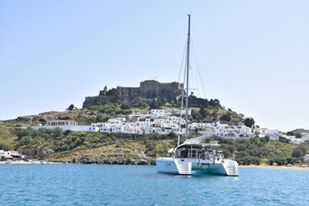 Then it was off to one of our other favourite destinations – Lindos. We had a great sail down the coast, scooting along on a nice reach. Joe and Barbara were loving it. We got to Lindos in the late afternoon to find a couple of yachts there – different to the crowded anchorage we found last time. We got a prime spot right off the beach on the sandy bottom. No wrapping our anchor chain around any rocks this time.
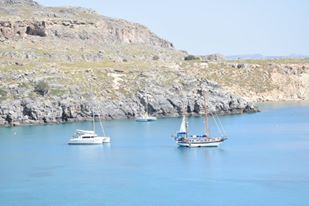 Anchored up, we dingied ashore and walked up to the castle, which had already shut for the day. Then we headed back down into the town and stopped off at our favourite Captains Bar. Saves (Greek for Steve) was there to great us and we reminisced about a few late nights in his bar last season. Then we headed off to check out the amphitheater and across to Ay Apostoli, an enclosed bay on the other side of Lindos where I had my first Greek Mojito of the season – oh how I’ve missed them. Dinner at Stephanies (but not on the roof – too cold) completed a pretty good day.
 Next day, it was up to the castle on the top of the headland, breathtakingly beautiful. The girls were keen to go shopping so I retreated to a nice beachside café for some blogging and photo uploading, which takes time in Greece given the piddley amount of bandwidth. Back on the boat, it was time for our first swim of the season in the beautifully clear water of Lindos. An afternoon relaxing before we pulled anchor and headed south towards Kasos, on the way to Crete.
 With 4 of us on board, the night went quickly as the winds died and we motored all the way. We arrived in Kasos at about 9am and had to administer mouth to mouth to see if we could possibly solicit any life out of the place. We pronounced it dead as a door nail and decided to make our own life. We bought fresh fish from a local fisherman and had it cooked at Mylos Restaurant overlooking the bay. Two other cats had pulled in and we met up at the restaurant to breath some life back into the town. One cat was Canadian, the other English and they had both been wintering in Crete at Agios Nikolaos, and had good things to say about it.
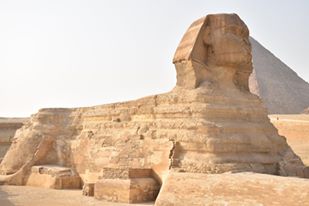
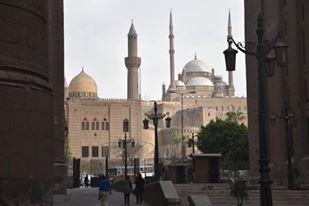
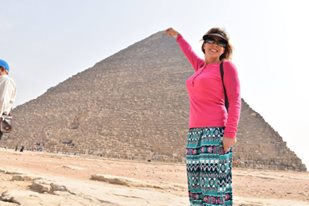 Next morning it was off to the Pyramids – of course. We’d arranged a tour through Emo Tours, who were the guys who picked us up from the airport. Having now experienced Egypt, we would probably find a good taxi driver and negotiate a day rate with him. For the Pyramids, I would also organize an Egyptologist, probably by getting the Taxi driver to find us one as well. We used a Taxi driver in Luxor to great effect and we like this strategy.

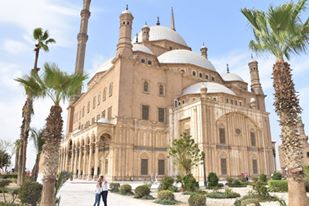
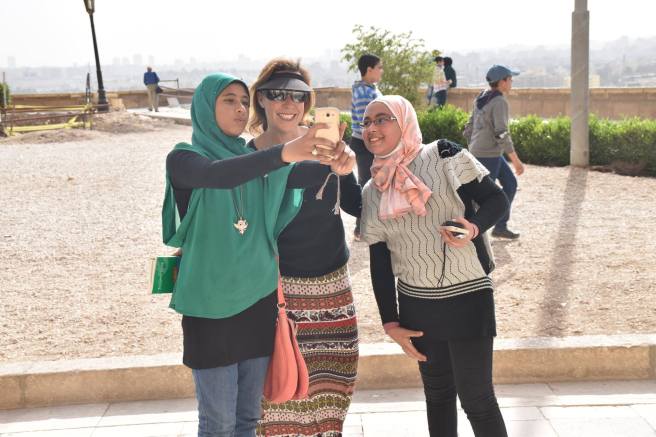 Next day, we walked around to the Egyptian Museum. We arrived pretty much as it opened and headed straight upstairs to King Tukenkarmen’s exhibit. It was mindblowing to see the famous mask. And we had the whole room to ourselves. There was a heap of stuff they’d recovered from his tomb and it was all there, glittering away. Unfortunately no photos were allowed so you will have to go and see it for yourselves.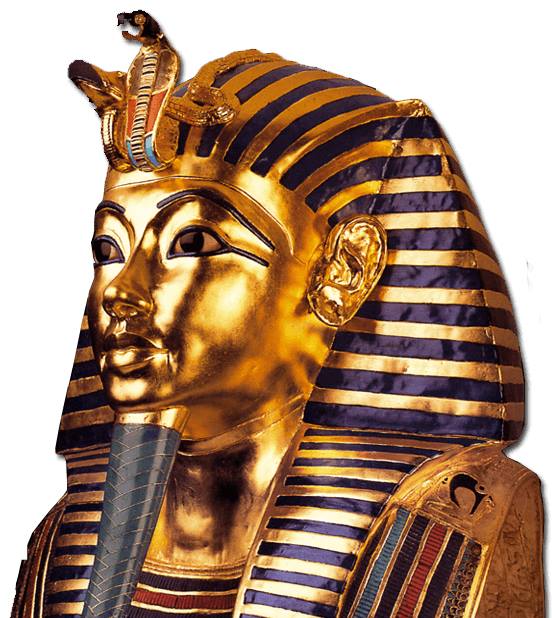
 It took us a good 2-3 hours to see everything, and once done we wandered down to the river and caught a local ferry for a couple of Egyptian Pounds each (about 40c aussie). The ferry didn’t quite get us to old Cairo so we hopped in a Taxi. Taxis are incredibly cheap if you use the meter AND google maps to stop the driver taking off in a completely wrong direction To be fair, this only happened to us once where we had to stop the taxi and get another one.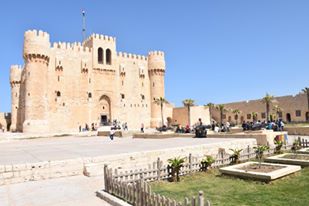
 Then it was off to the Alexandria Library, or so we thought. Our taxi driver had no idea of how to get there and kept stopping to ask along the way. When he missed a turn to get there, he just gave up and headed back to Cairo, leaving two unhappy campers in the back seat. It was all too much for him. And so we ended up going all the way to Alexandria and seeing two things.
  Karnak Temple was just so big with rows and rows of columns. Overall it covers 123 hectares and simply blows your socks off. In between visiting the Temples we checked out the Luxor museum, which was brilliantly presented (especially when compared to the ramshackle displays in Cairo Museum).
 day, we headed over the Nile to the West Bank. Ancient Egyptians used to live on the East Bank and bury their dead on the West Bank; on the basis that this is where the sun went down. First stop was the Temple of Queen Hatshepsut (Hot Chicken Soup) at El-Deir. It was very striking, set back in a natural amphitheatre at the foot of steep oche coloured cliffs.

 Once we got there, we checked out the Valley of the Nobles and the Tombs of the Workers, both of which were quite impressive, before going to the Temple of Seti and then onto
  Howard Carters House, which was set out as he had it in the 1930’s when he lived there. There was a replica King Tut tomb at the back of the house and that was good given I’d passed on seeing the one in the Valley of the Kings.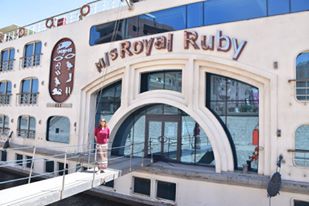
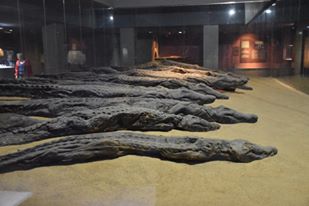
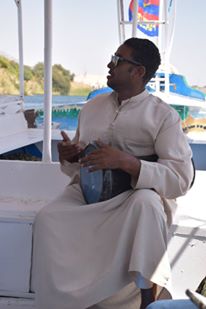 Next morning, we woke up in Aswan, our final destination. After breakfast, we hopped on a traditional felucca for a sail on the Nile. We visited a botanical garden set up by Lord Carnarvon on Kitchner Island, which had trees and plants from just about everywhere in the world. Then we transferred to a outboard engine powered boat for a trip through the cataracts past yet more islands to visit a Nubian Village. The Nubians are the locals that live on the upper Nile and into Sudan, dark skinned people who dress really colourfully and live life to the full with lots of music and laughter. We drank tea and listened to a wonderful sing along. Hopping back in the boat, we headed back to the Royal Ruby passing Elephantine Island, with its elephant like
 rock formations that give it its name. After lunch, we jumped into a car and drove over the low dam built in the 20’s to the high dam, built in the 1980’s. Lake Nassar is huge, and the dam was quite interesting in it enormity. Another drive and a boat trip saw us at Philae Temple, which used to be on another island until UNESCO moved its 11,000 pieces to a higher island that escaped the clutches of the rising waters from the high dam. That night was our last on the Royal Ruby and we were treated to a Nubian floor show. Very colourful.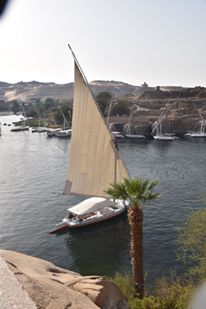
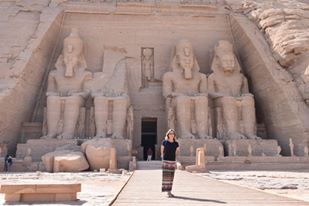 Next day, it was up early and off to Abu Simbel, one of the highlights of Egypt. We took a tour and it was a 3 hour min-bus ride there across the desert, heading along Lake Nassar, near the Sudanese border. Abu Simbel is pretty much famous around the world having been “moved” up above the water line of Lake Nassar, before the lake could cover it. The magnificent great temple was built by Rameses Number 2 and boy did Rameses love himself, given that all the huge carvings of himself – makes The Donald look a bit look shy and reserved in comparison. The 4 statues at the front are carved into the rock face, all Rameses 2 and measure 20m high, bigger than the giant ones at Luxor. Inside is really interesting too, a huge space cut out of the rock, with more statues of the good pharaoh along with painted scenes of the battle of Qadesh against the Hittites that he evidently fought magnificently in.
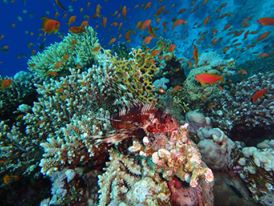
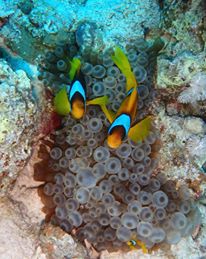
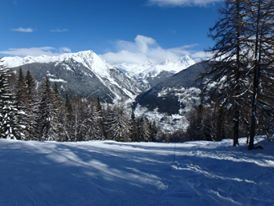
 Landing at Geneva, we hopped in a 4WD and headed towards Megeve. We’d found a hotel, walking distance from the ski lift and it turned out to be a good choice. Megeve has 4 different ski fields, and Dee managed to ski all four whilst I re-acquainted myself with the art of (un)controlled falling down a snow-covered mountainside. The Megeve town was postcard perfect, complete with cutesy churches, Xmas trees and bars selling mulled wine.
 After 4 days skiing, it was time to take a day off and head to Chamonix, another of those cutesy (but expensive) famous ski towns. We managed to find Dee’s favourite restaurant from years ago and enjoyed a nice Valentines Day lunch overlooking the river.
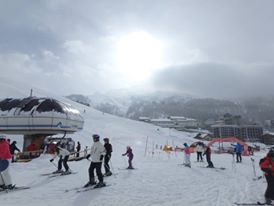 Dee was still going strong so we went off to look for better snow. We found it in Cervinia, on the other side of the Matterhorn from Zermatt in Switzerland. Dee had fun skiing across to Zermatt, whilst I checked out the Trauma Centre for a couple of matching knee X-rays and some expensive knee braces.
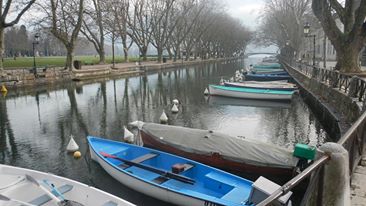 Annecy is really beautiful, set on the Lake that bears its name, it is sometimes called theVenice of the Alps with its two canals and the river Thiou flowing through the old city. We hit upon a student show at the old gaol that is in the middle of the river that night, which was rather fortunate as the gaol wasn’t normally open to the public.
 Next day we headed to Lyon for our last few days of the trip. What a brilliant French city. We had a great time, wandering the various neighbourhoods of Lyon, visiting great churches, historic old town, great museums and squares and monuments. The Lumiere museum was a highlight – Lyon was where the Lumiere brothers did their stuff. We even found time to go and see a Joe Jackson concert – a blast from the past.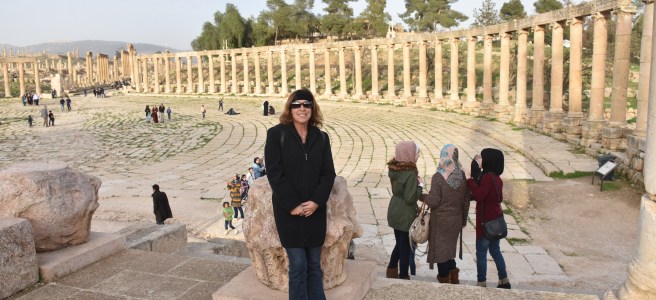
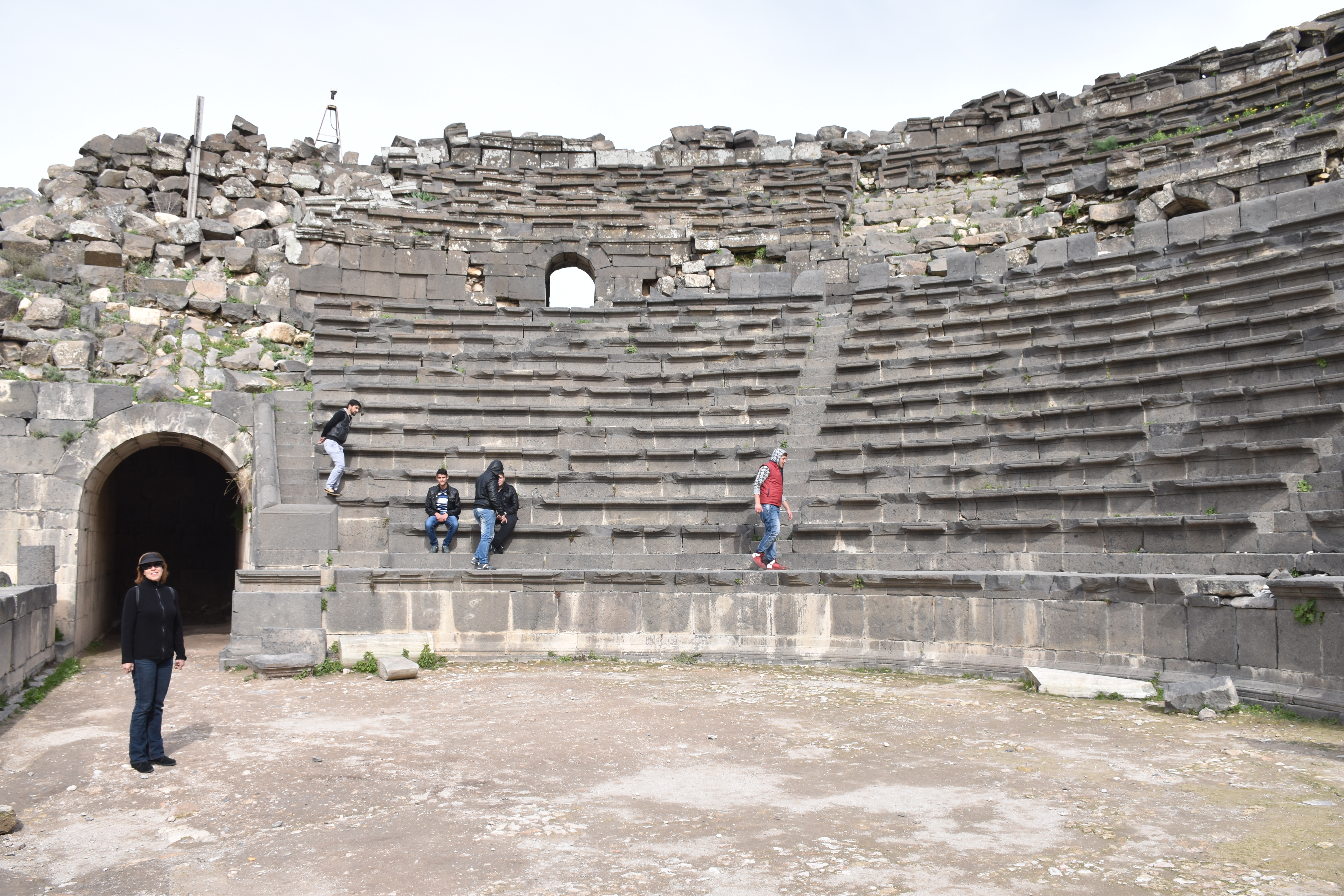
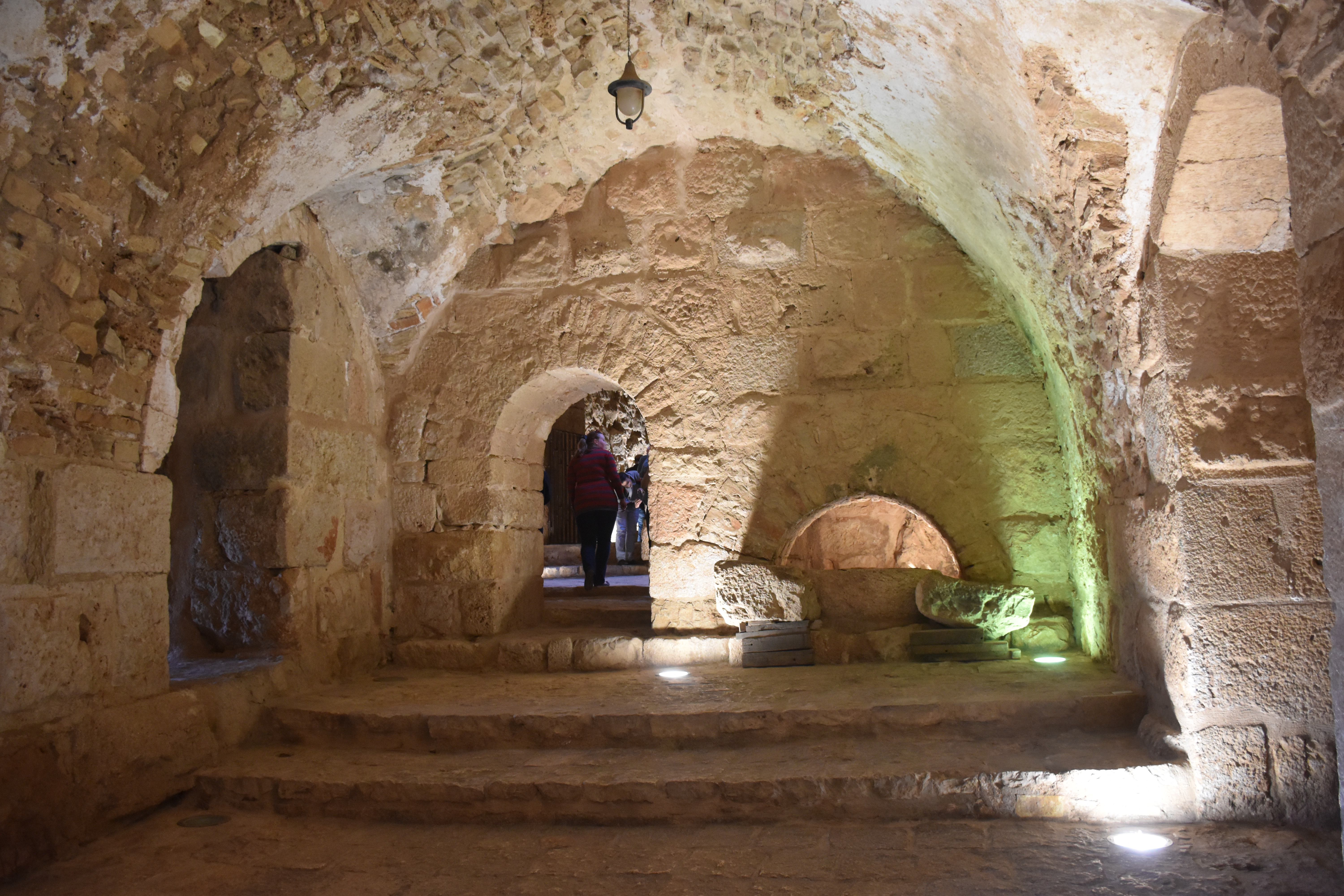
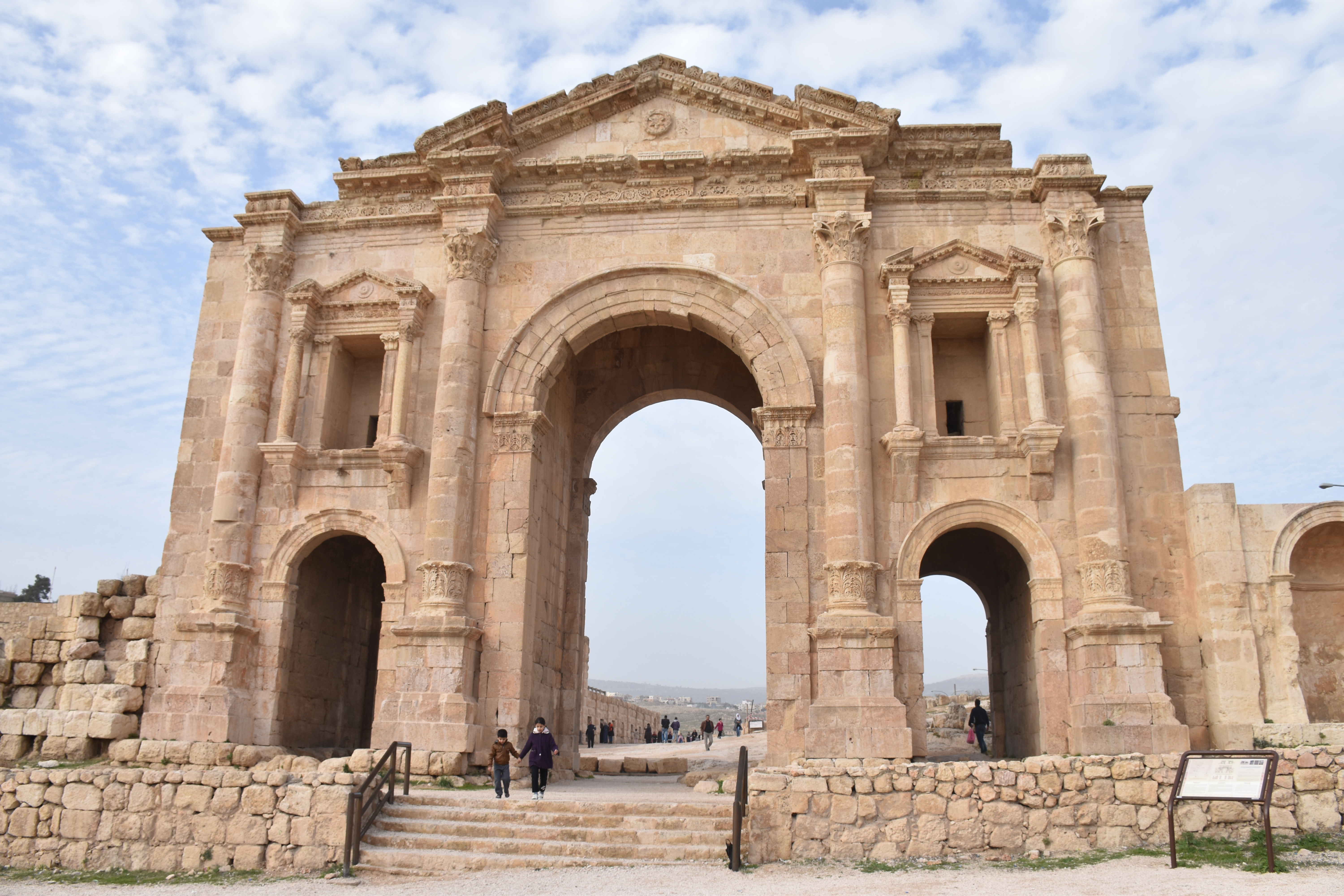
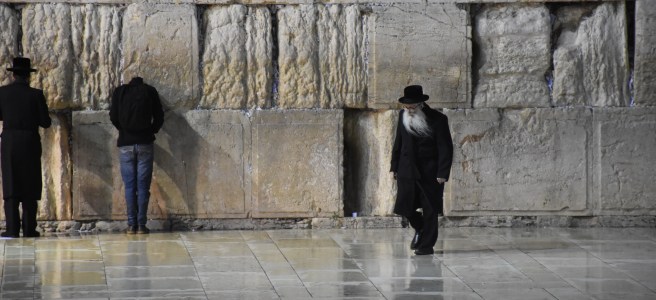

 We finished off Dee’s Birthday with a beautiful meal in one of Tel Aviv’s best restaurants, with a nice bottle of Sancerre wine. Dinner finished, we hunted down some Israeli Rock and Roll, down in a basement bar. The band played all the classics in English, but spoke Hebrew in between songs. The crowd were a little bit subdued, sitting in rows of chairs, very appreciative of the music – but no sign of any dancing. Interesting.
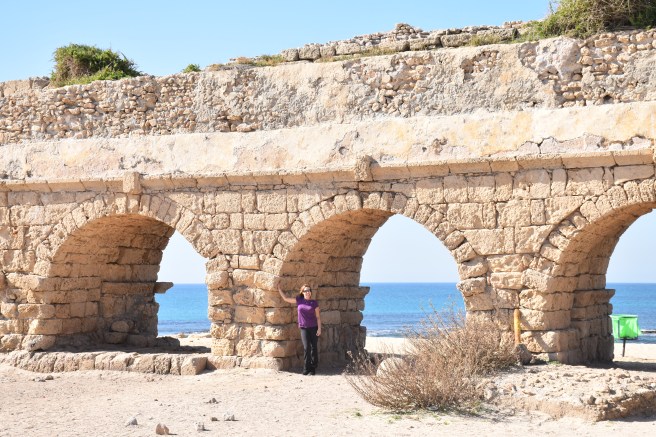
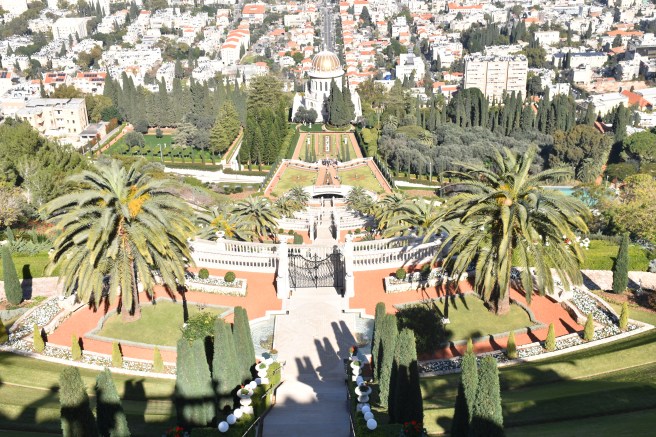

 We were setting our usual frantic pace as we headed for the Sea of Galilee next morning. We checked out all of JC’s hangouts –the Mount of Beatitudes site of the “Sermon of the Mount”, the Church of the Multiplication of the Loaves and Fishes, and Capernaum, where Jesus spent time teaching in the local synagogue. We also called in a kibbutz and checked out a museum where they had restored a fishing boat from JC’s time.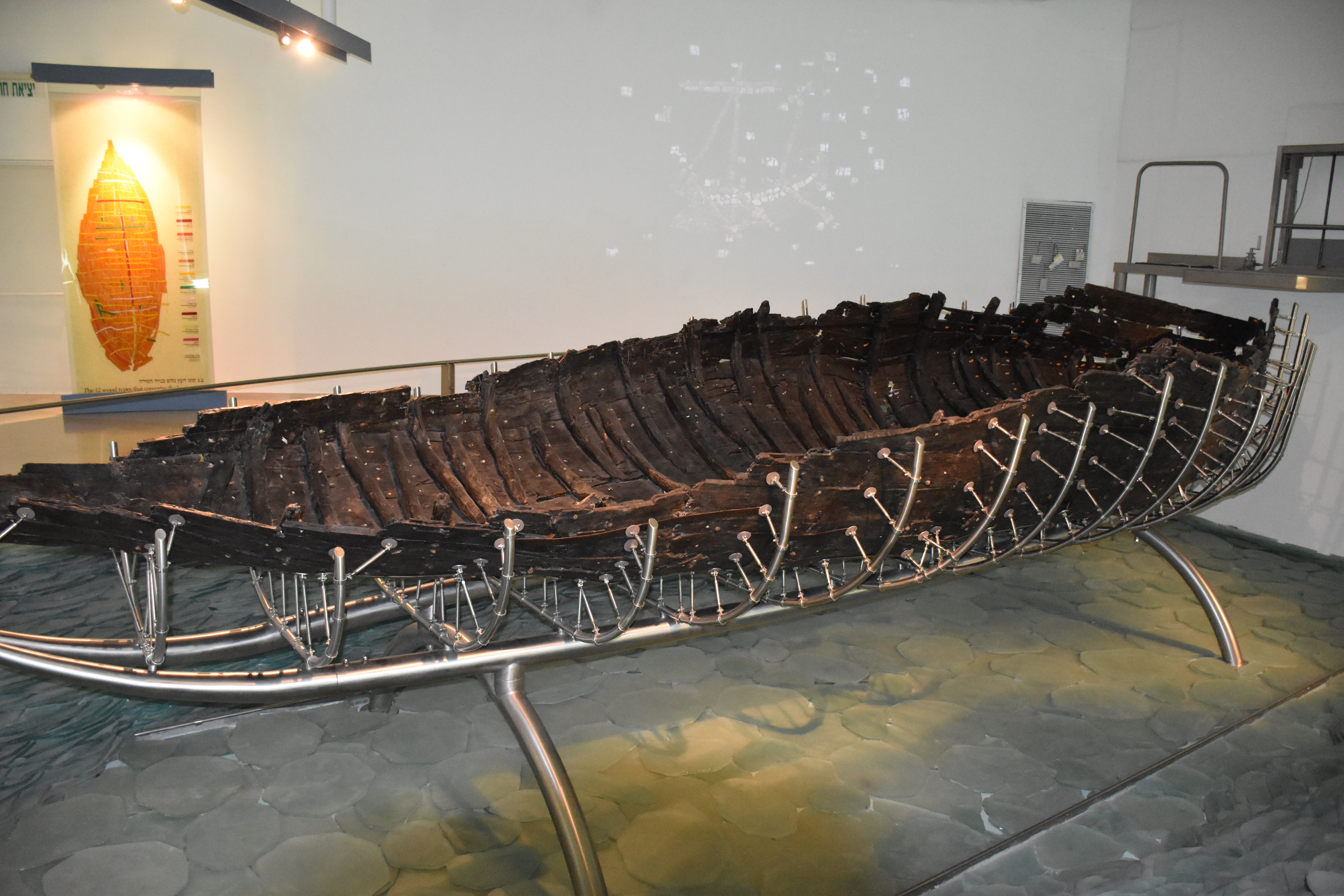
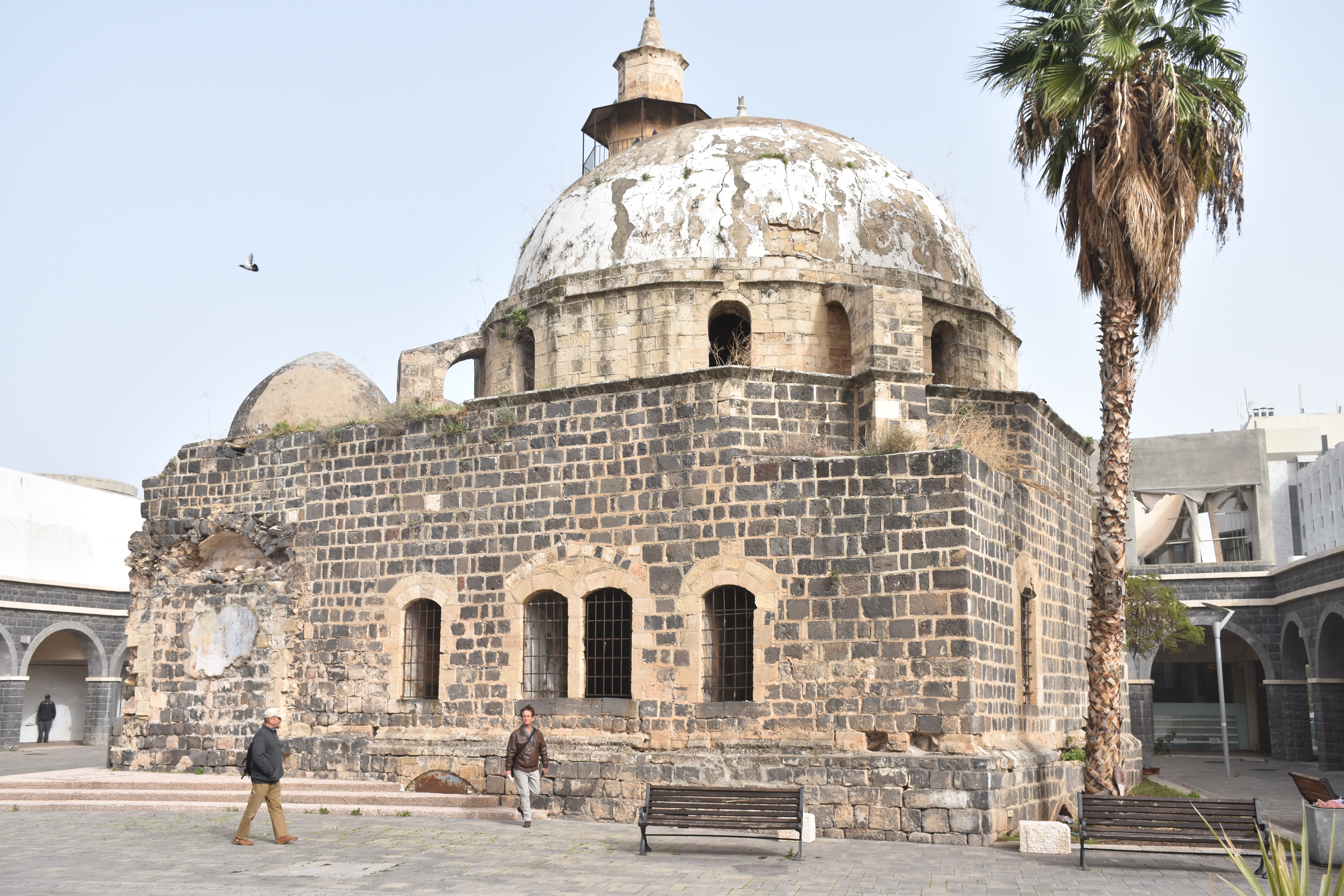


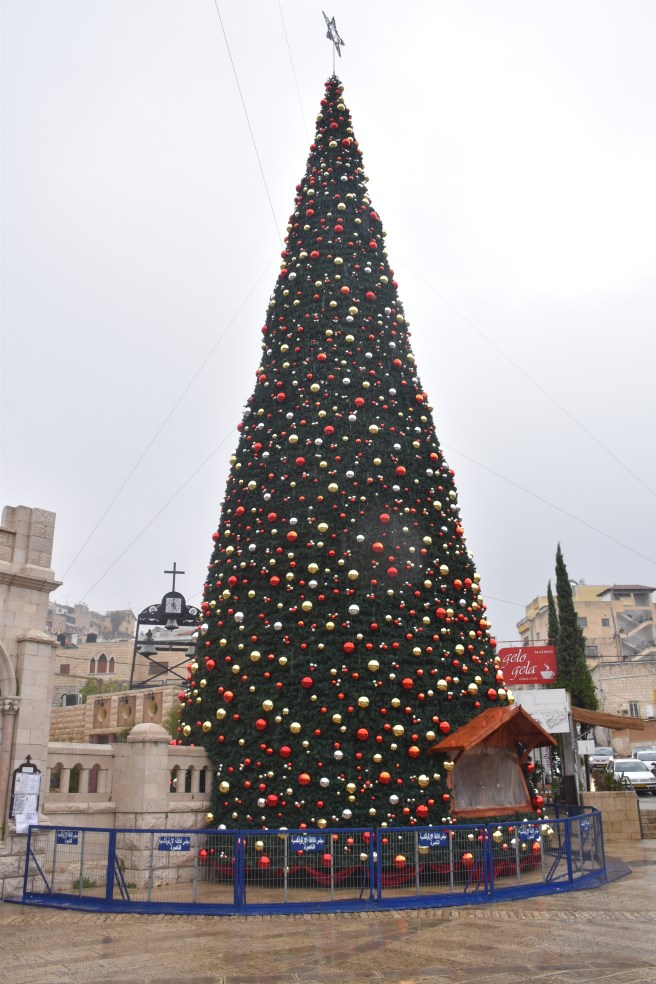


 driver. We visited King Harod’s Castle, Bethlehem, Jericho, which lays claim to being the oldest city in the world, and the Jordan River where JC was baptized (along with a steady stream of Christians who come for the same reason). We felt for the lovely people of the West Bank who we met, who are essentially stateless and therefore are unable to live a normal life with things we take for granted.

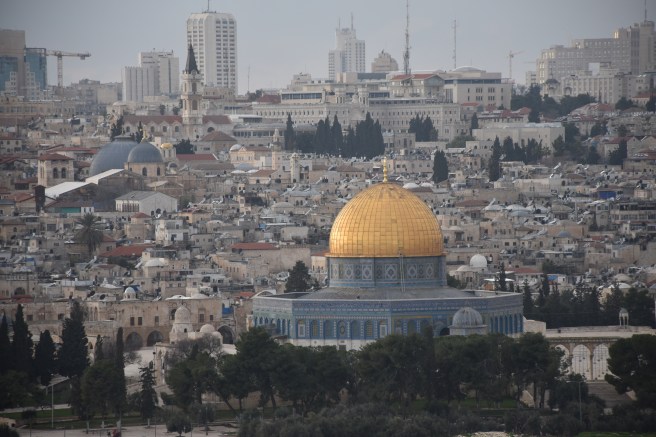
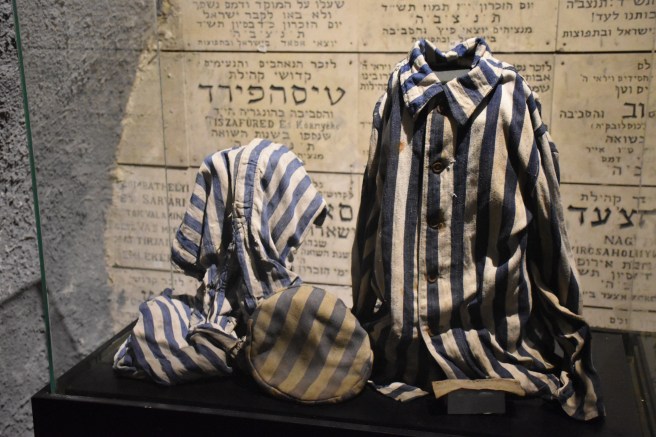

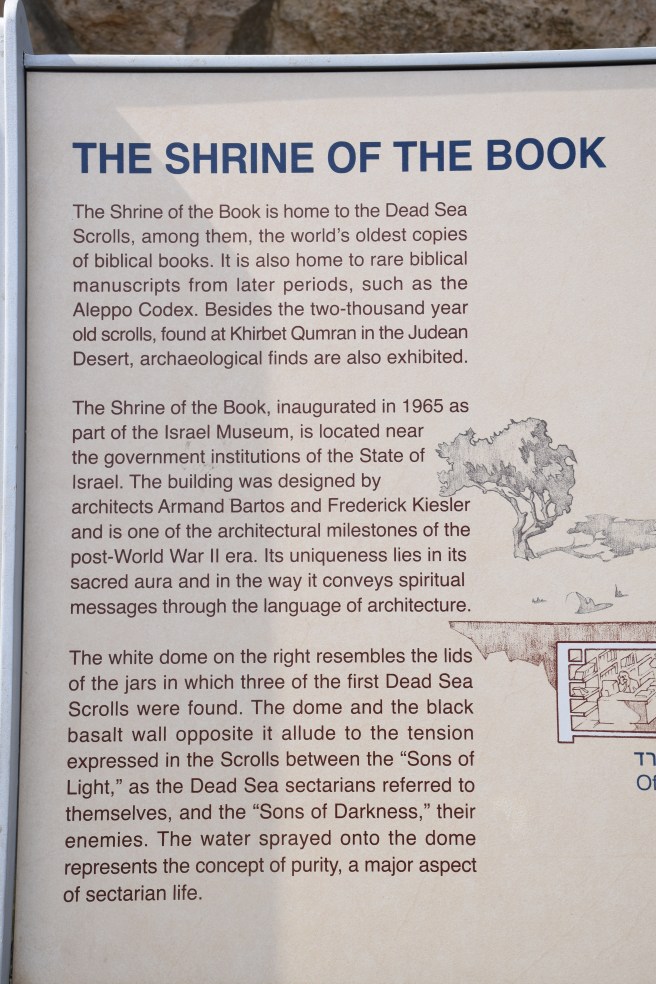
 Jerusalem more or less done, it was time to head for Jordan. We dropped the hire car off in Jerusalem and caught the bus to Beit She’an and then a short taxi ride to the northern Jordan River / Sheikh Hussein Bridge crossing. The Allenby Bridge / King Hussein Bridge crossing was closer but we weren’t allowed to cross here.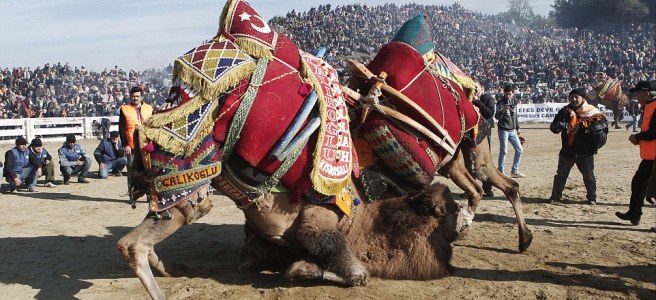


 3. Lindos on Rhodes – beautiful bay underneath a stunning acropolis – a natural citadel which was fortified successively by the Greeks, the Romans, the Byzantines, the Knights of St John and the Ottomans. The town underneath the acropolis is brilliant with great little shops and ships captains’ houses that have been converted into restaurants and bars. See


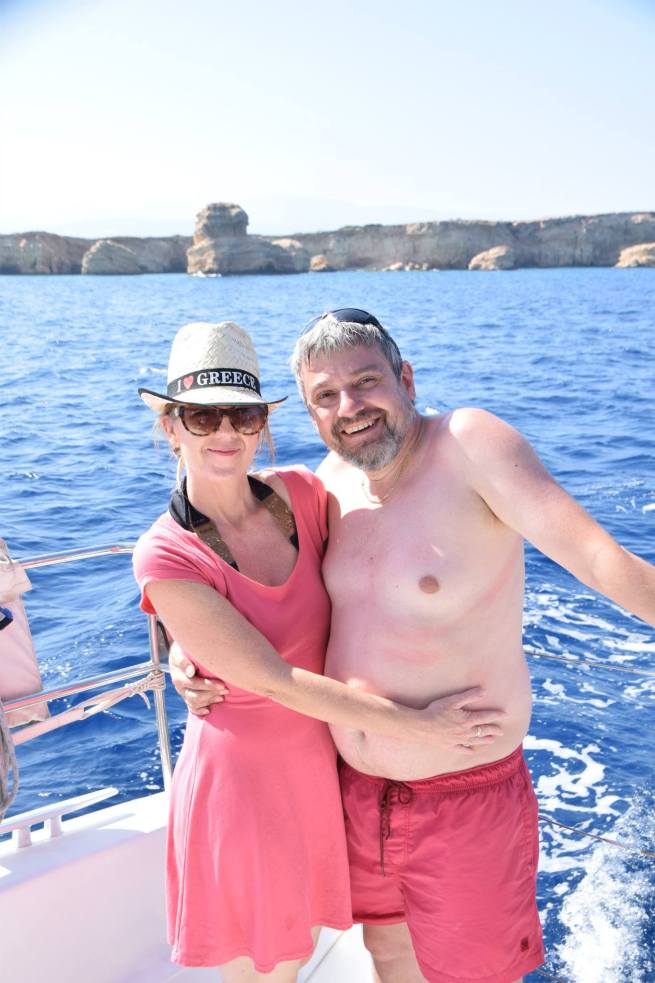


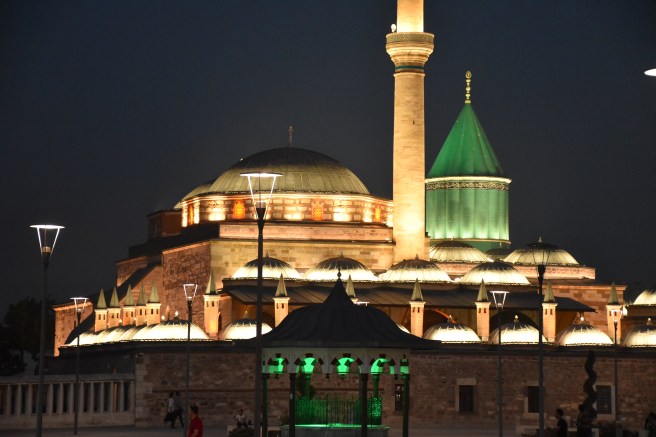
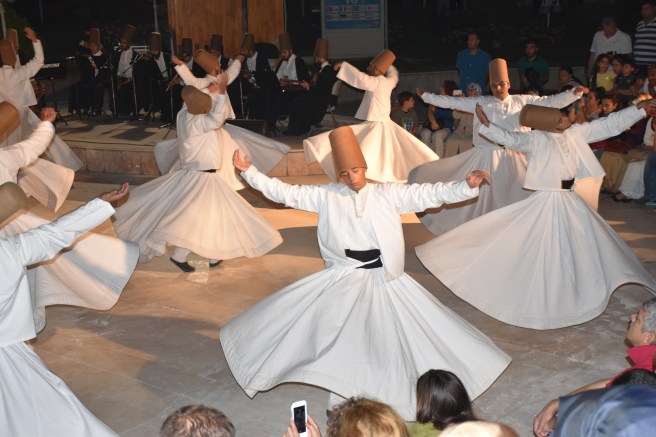


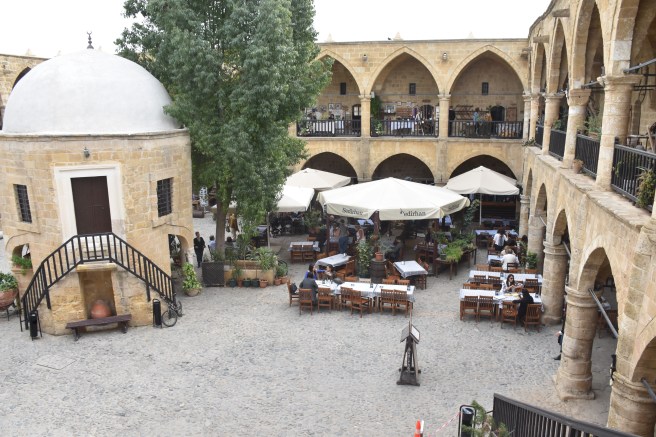


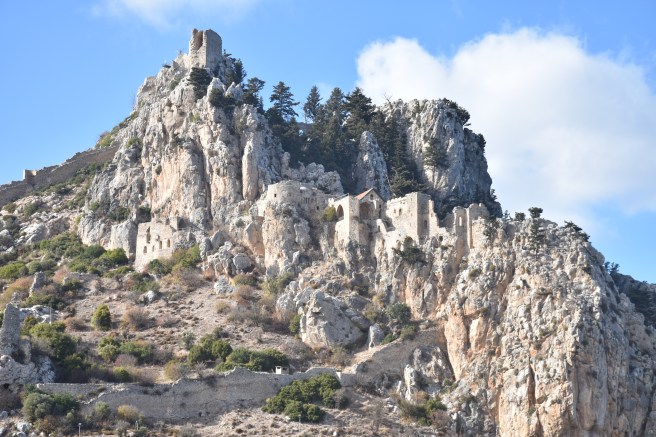 Moving right along, we continued on to Bellapais Abbey, just above Girne. It was a very picturesque mostastery, with an equally picturesque little village, with very narrow streets – a magnet for tourists.


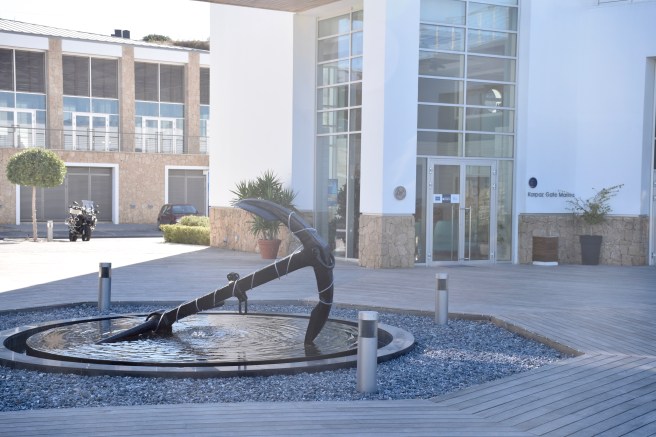


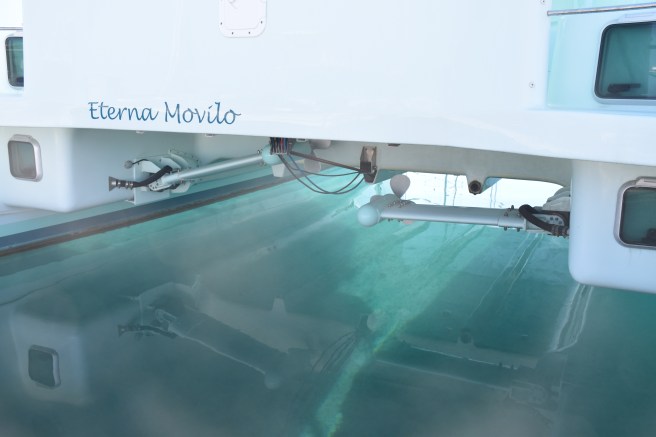


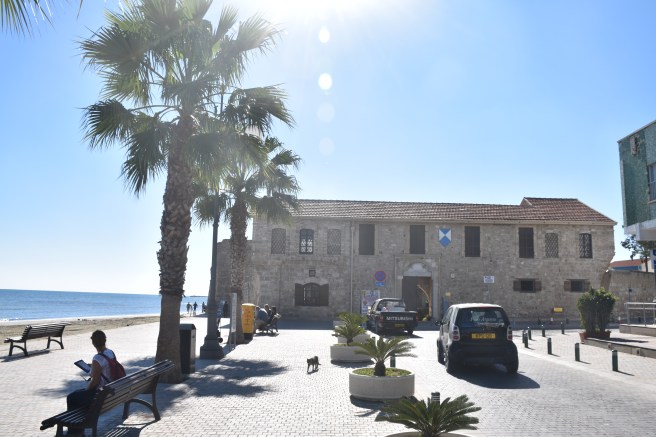
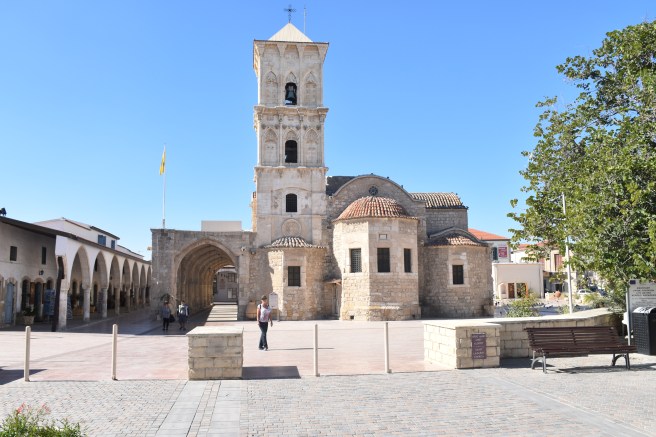


 A Little Bit of Mischief